Wonder of Women
I find myself with the good fortune that I am again living in a country with their own holiday for celebrating women. I grew up celebrating Martisor ("little March") in Romania, which is their own national women's day on March 1st. Flowers and special pins are gifted to significant women in your life, including relatives, teachers, colleagues, and friends. Cards, chocolates, or other gifts might also accompany the traditional pins. It is a day of gratitude, respect, and adoration towards the ladies of your life. Seven days later is International Women's Day, which was not typically recognized with much fanfare in Romania, nor have I noticed that America does much to celebrate it except sometimes a march, depending on the political climate that year. A month later, on April 7th is Mozambiquan Women's Day. This is a national holiday which closes schools and most places of business. Women dress up in traditional clothing and special face paint and spend the whole day celebrating themselves and each other through ceremony, dance, singing, and sport. Spring of the northern hemisphere (autumn down in this half of the world) seems to be the season of women. I was so fortunate to be in Corrane for both international and local women's day here, and marveled at the beauty which is found in the company of sisterhood.
March
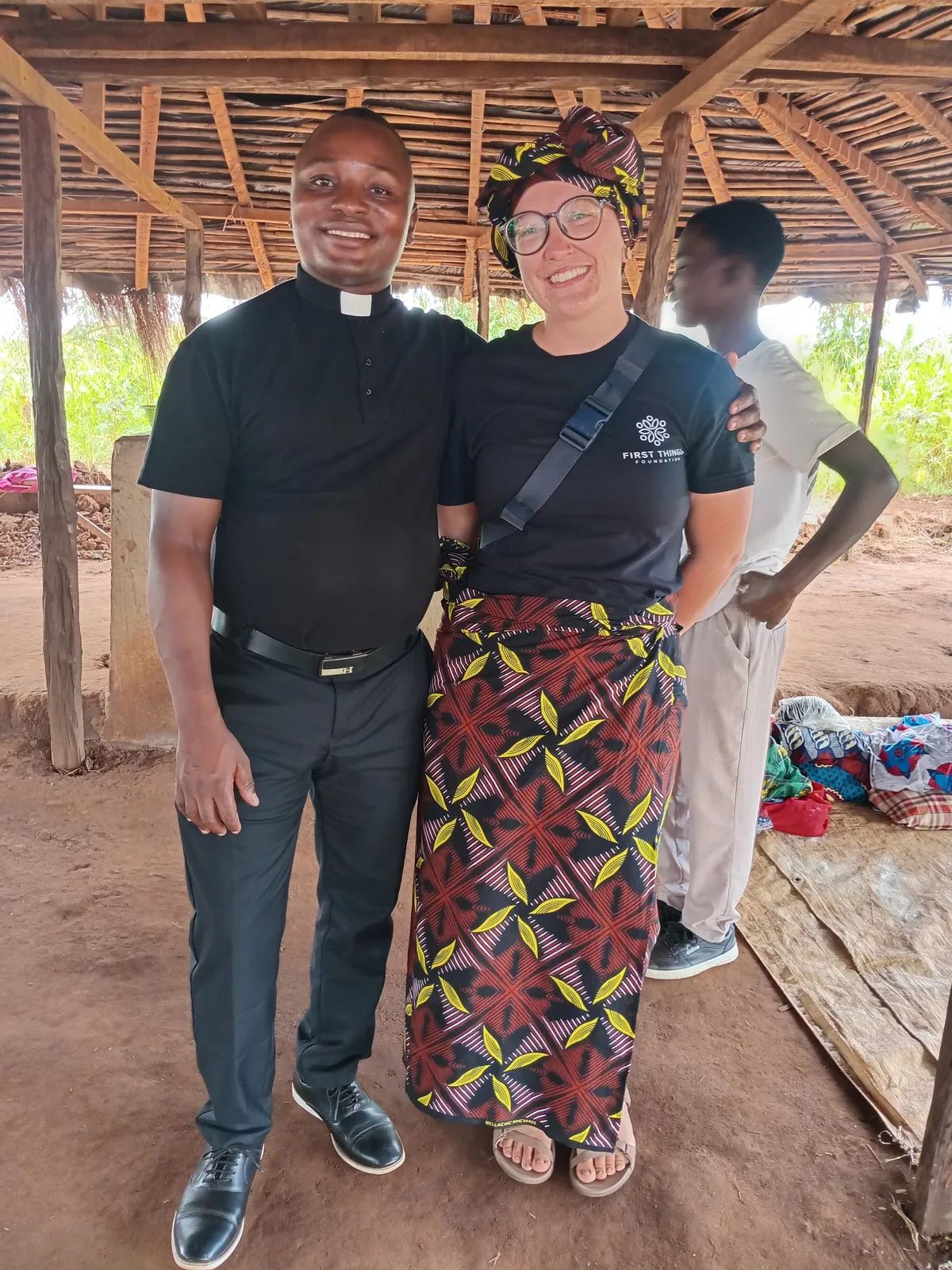
On the eve of International Women's Day I intersected with sister Salome, the head nun at the convent where I live. She mentioned in passing that there would be a party tomorrow for the holiday and I would be welcome to join. I told her I would love to tag along and she made sure I knew that I should wear a capulana (traditional skirts for women here). To this I responded that of course I would dress not only in capulana, but also with matching headscarf. I am glad that I have a nice set from the coming-of-age ceremony I attended a couple months back. The next morning, I wake early to make sure I have time to wrap myself gracefully. Sometimes it takes me a few tries to turn the two rectangles into a presentable skirt and headdress. We set off in the truck with Salome driving, the second-in-charge nun and myself in the backseat of the cab, and the other 9 sisters in the truck bed. We drive across the square outside our compound and pick up a visiting father, who will be delivering the sermon at the event. He greets me with ample curiosity, and in surprisingly eloquent English. We exchange a few greetings and questions, but the conversation returns quickly to Portuguese in order to include Salome and the other sister.
I am not entirely sure what to expect from the event, or even where it will be. I just said yes to the invitation last night and didn't ask for any follow-up information, knowing I wouldn't understand a lot of it anyway. A 15 minute drive takes us to the UN resettlement camp which is situated just a few kilometers outside of Corrane. This camp was built to house people displaced by the ongoing Islamic insurgency in the province to the north of us, Cabo Delgado. I know that sister Salome has a women's group that she runs at the camp, so it makes sense that this would be the location of the event. As we are approaching the party venue the sisters are singing church songs as they bounce in the truck bed and are warmly greeted by groups of women all walking in the same direction. Many of the women are wearing this one particular purple skirt, which I assume must have been a giveaway during a previous year's event, as it matches sister Salome's.
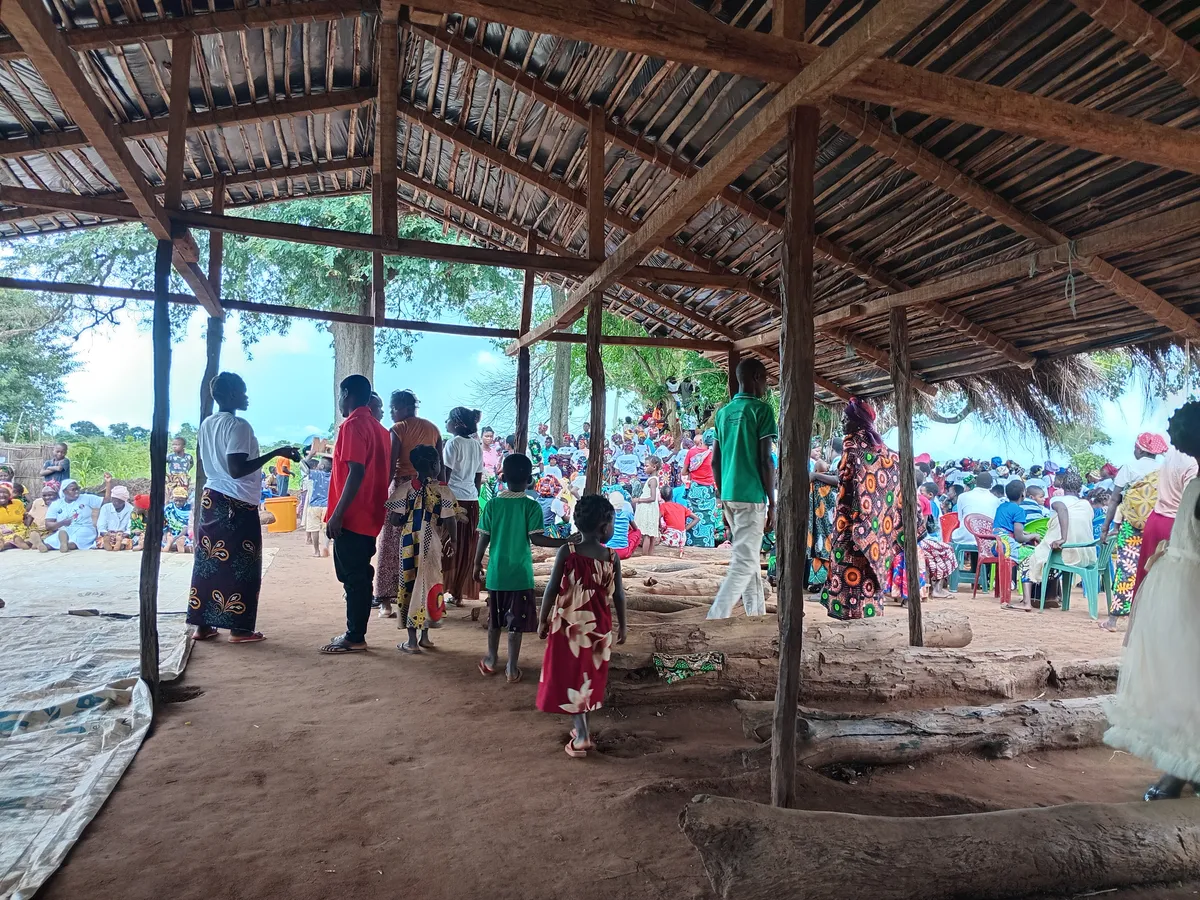
We arrive at the Catholic church in the settlement, which has open air seating with logs for pews and a thatched roof. There is a row of plastic chairs along one side, which is typical for events here and are offered to the VIPs. My white skin makes me a VIP at every event in Corrane, and usually I have to begrudgingly accept the chair even though I hate the privilege and also the visibility that goes along with it. However, today I am invited by the sisters to sit with them in the front rows by the pulpit. They are the choir singers who lead all the worship and I have been secretly hoping I can start sitting with them so I can learn some of the songs. I perch myself in the middle of the second-row log, surrounded on all sides by the sisters. I am relieved I am out of the spotlight, at least for now. Salome introduces the visiting father who will be giving the sermon and also calls me out by name and has me stand to wave at the large crowd seated behind me. She makes a comment on how nice my outfit is, and I feel myself blush.
The service starts with singing and then transitions to the sermon. The message today is not only delivered in Makhua and Portuguese, but also translated into the Cabo Delgado tribal language as well. As usual, I enjoy trying to pick out familiar words in Makhua and can mostly follow the Portuguese if I can catch the context. The message is about the strength and importance of women, and uses different female figures in the Bible to discuss the role of women in the household. I find it ironic that it is delivered by a man to a group of almost exclusively women, as Catholicism has yet to allow women to be ordained.
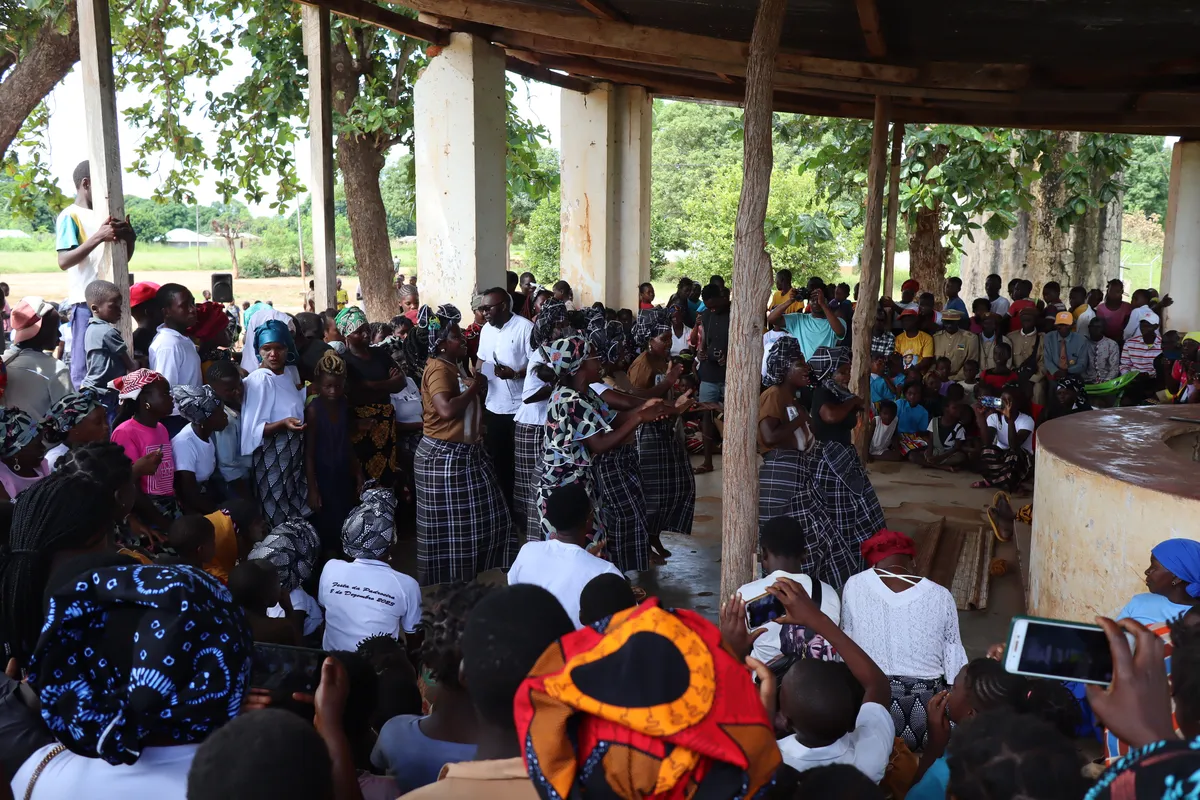
After the long-winded, twice translated, sermon is over we get to the offering portion of the service. This includes lots of lively singing and chanting as groups of women dance their way down the aisle to make their offerings at the pulpit. Some parishioners give money here, but it is typical for large events to bring an offering from your farm. Freshly picked corn, cassava, peanuts, sugarcane, and other crops are bundled in cloth and laid at the altar. There are also a few hand-woven mats as well as some live chickens. There are likely at least 100 women who are presenting something to the front, so the offering takes over an hour and creates a pretty massive pile at the pulpit.
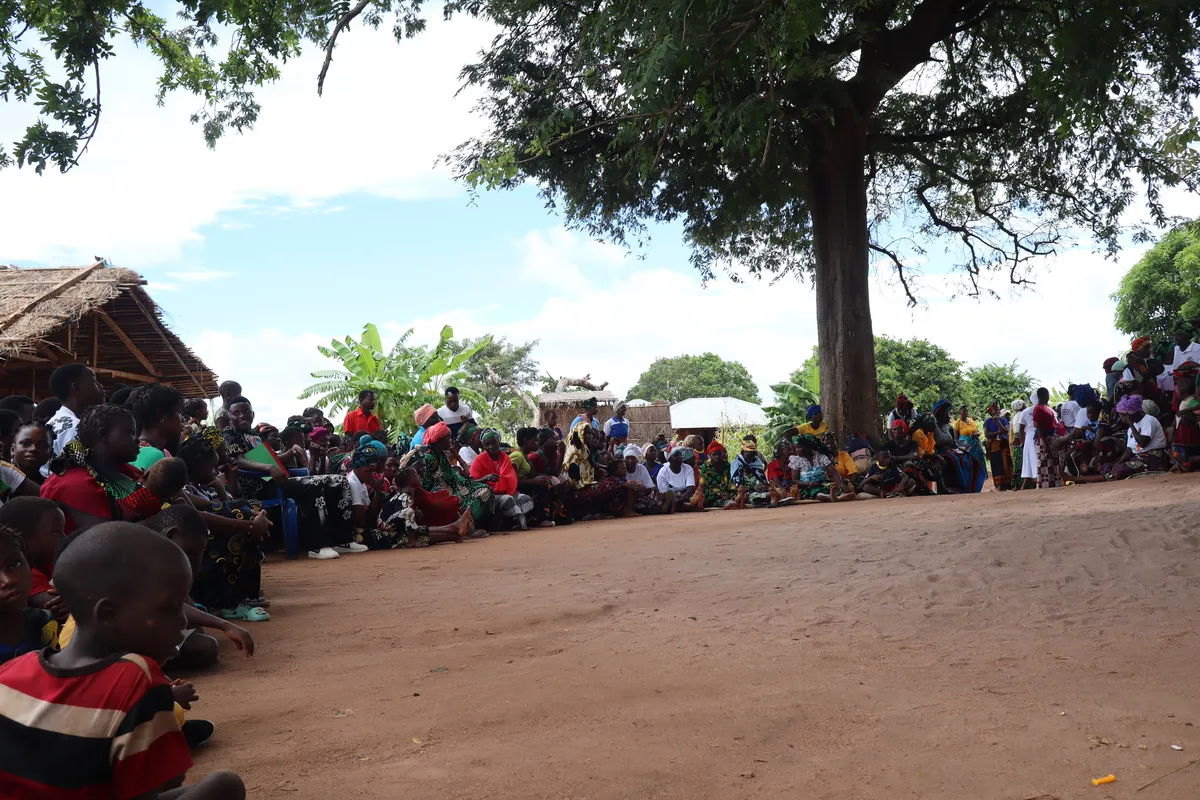
After the service concludes with more singing and some closing remarks, the large crowd transitions to the open area behind the church which is shaded by a large tree. Here the drummers set up at the base of the tree and begin to start the ceremony of traditional dances. I am seated in the row of VIP chairs while everyone else sits on the ground. Different groups of women have prepared various skits or dances and perform for the group. Sometimes members of the crowd spontaneously join in the dancing or are invited by an outstretched hand of a performer. Most women perform barefoot on the sandy dancefloor, stomping in unison with their sisterhood. The crowd gets pretty lively by the end, with lots of cheering and participation. After the dancing concludes, a few small groups of women return to the bubbling pots which have been preparing the feast for the crowd of at least 200 people.
I am seated with the VIPs at the table in the covered area behind the pulpit. Everyone else is sitting on the ground in smaller groups under the tree or using the log pews. The VIP group includes sister Salome, the second-in-charge, the director of the primary school, the wife of the manager at Deep Roots Farm, and the visiting father. He is the only man at the table and makes a scene about wanting to sit next to the American. We are served beans, goat, rice, and xima (cornmeal paste). The food is excellent and I enjoy everyone's surprise when I choose the xima instead of the rice. I genuinely do like it better, but it is also a practical choice since it's so much easier to eat with your hands. At least 5 hours after we arrived, the offering is loaded up into the truck and we head back to the convent.
Upon arriving home, I close myself in my room for the remainder of the late afternoon. Big events here are still very overstimulating for me, and the special attention I receive only adds to the pressure and the intensity of the crowd. I usually need a few hours in the dark with soft music to get my nerves back to baseline. But, I am still very happy that I participated in the festivities. I am always looking for opportunities to interact more with the sisters, since our daily lives have typically been pretty separate so far. I am grateful for how welcoming the women here are to me, even if sometimes I feel completely out of place. The more I wear the capulana, and the more my language improves, I hope that I will slowly feel the belonging that they so generously offer me.
April
In the weeks leading up to Mozambiquan Women's day, I had started to make plans with my Makhua teacher, Amelia, to host a large gathering at her house. She runs a single women's group through her church and was excited at the opportunity for us to work together to celebrate them with food and clothing. Unfortunately, those plans fell through when her house quite literally fell through. We had a few heavy rainstorms in a row and two interior walls of her mud home collapsed. She was able to get the roof fortified and keep the house standing, but party plans and any other plans all went on hold while she worked to resolve the issue. This is the way of things here, plans can be made, but flexibility is often needed to contend with weather, disease, and/or general disaster.
The weekend before women's day, I ended up in the city to work on some visa paperwork and took it upon myself to gather some last-minute items to still mark the occasion, even if it would just be us. Mozambique is the only site in our foundation which does not use host families to house the volunteers. Amelia has become like a host mother to us, even though we don't live there. She teaches us to cook, checks on us when we are sick, gives us cultural advice, finds an electrician when the power is out, and so many more little things that you need when you are adrift and alone in a foreign place. I was determined to celebrate her, even if our party plans had dissolved.
The first and most important errand was to find us some matching capulanas. Similar to the coming-of-age party and the international women's day party, matching capulanas communicate bond through sameness. I set out on a Saturday morning in Nampula in search of the perfect print. I had already gone to the large clothing market twice before to shop for myself and felt comfortable navigating the many capulana stalls. The new experience would be getting them cut and sewn, which I have not yet tackled. I set out with my fabric tote and all the feminine energy I can muster. I am wearing a flowy tie-dye dress I bought at the market last time. It is a loose fitting, full-length dress which becomes even more beautiful when it catches the morning breeze.
I walk with a confident gait, but curious gaze as I approach the area with the capulana stalls which encapsulates an area about the size of a city block. There is a large building on the block whose ground floor is lined with individual storefronts which offer sales inside modestly sized rooms. Here you can usually buy for a bulk price, as their stock is extensive. Capulana are displayed floor to ceiling on the walls for easy browsing and customers simply point to the print they want. The vendor then pulls a bulk pack of that print from the piles of thousands of pieces of fabric. Outside, small stalls have a modest display of about 10 or 20 prints laid on a table, and a few more dangling from umbrellas to catch the eyes of customers walking by. There are about 5 interior stores and maybe 50 outdoor stalls. I notice quickly that all the interior stores are run by men, and most of the booths outside are women. I weave my way through the dense crowds both inside and outside browsing the hundreds of prints, the vast majority of the customers being women preparing for the upcoming holiday. I am the only white person in a sea of at least 1,000 shoppers, my skin casting my own personal spotlight.
A woman calls me over and she gives me a big smile when I greet her in Makhua. She pulls out a pink and navy print that is one I have never seen before, the shapes reminding me of embryos and fallopian tubes. This is definitely it. The capulana economy here is quite interesting, as there is a universal price determined for buying just one (250 Metical, just under $4), but when you buy multiple you can get a deal. The larger stores have advertised bulk rates which are fixed, but at smaller stalls prices are a little more fluid. She makes me a great offer for the 6 pieces that I order and gets them folded up for me. I appreciate getting a good deal despite the fact that she could try to charge full price for my whiteness. We have a brief exchange in Makhua and I am relishing the positive feminine energy.
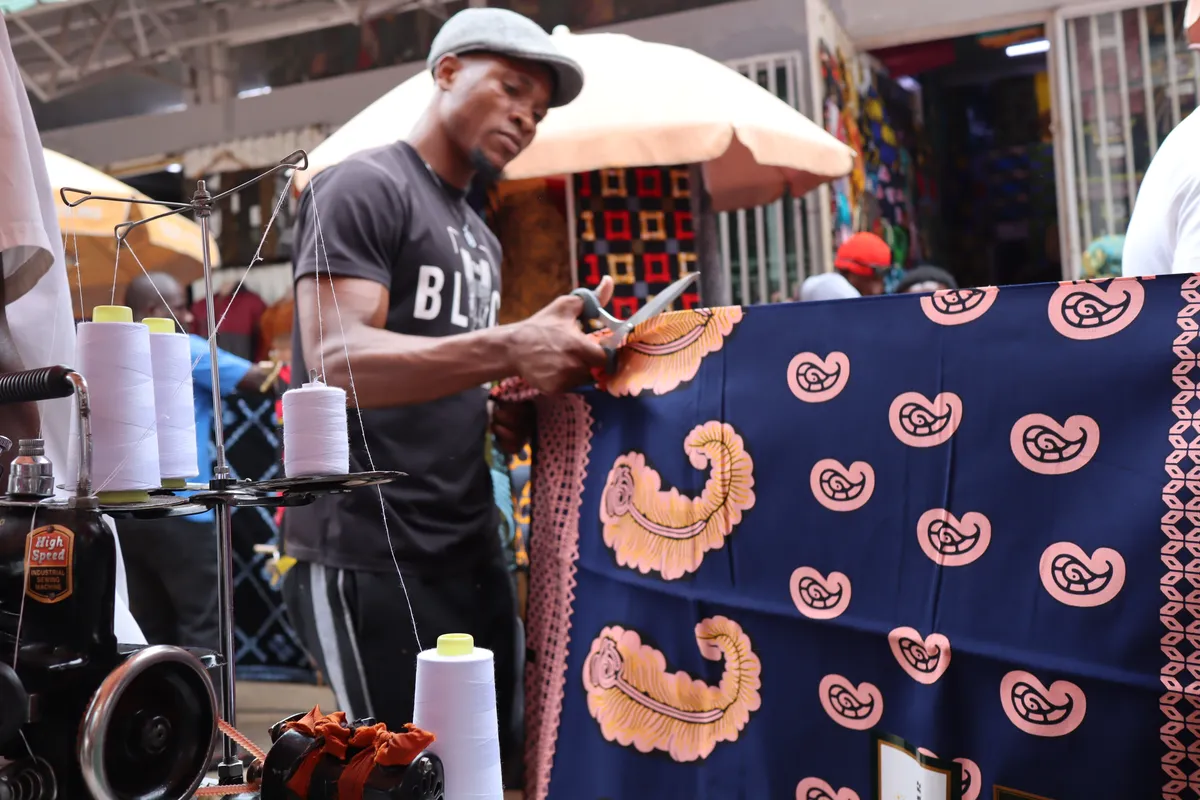
With fabric procured, it's now time to tackle the sewing. There are at least 20 men stationed at outdoor sewing stations, packed into a pretty small area at the end of the fabric section of the street. About a third of them are busy sewing something, and the rest are eagerly scanning the crowd for customers. They all offer the same service for the same price, so their marketing is quite aggressive. Even with my fabric concealed in my bag, they immediately notice me looking into the sea of sewing machines and can tell just in my eyes that I am searching for a sewer. Three men approach me at the same time. One is verbally calling me over, another is reaching for my hand, and the third is grabbing my bag. I immediately wave them all away, clutching my bag tightly and expressing my distaste for the physical touching. I follow the man who gave the verbal offer and shoot disapproving looks at the other two as I am guided to the very center of the grid of sewers.
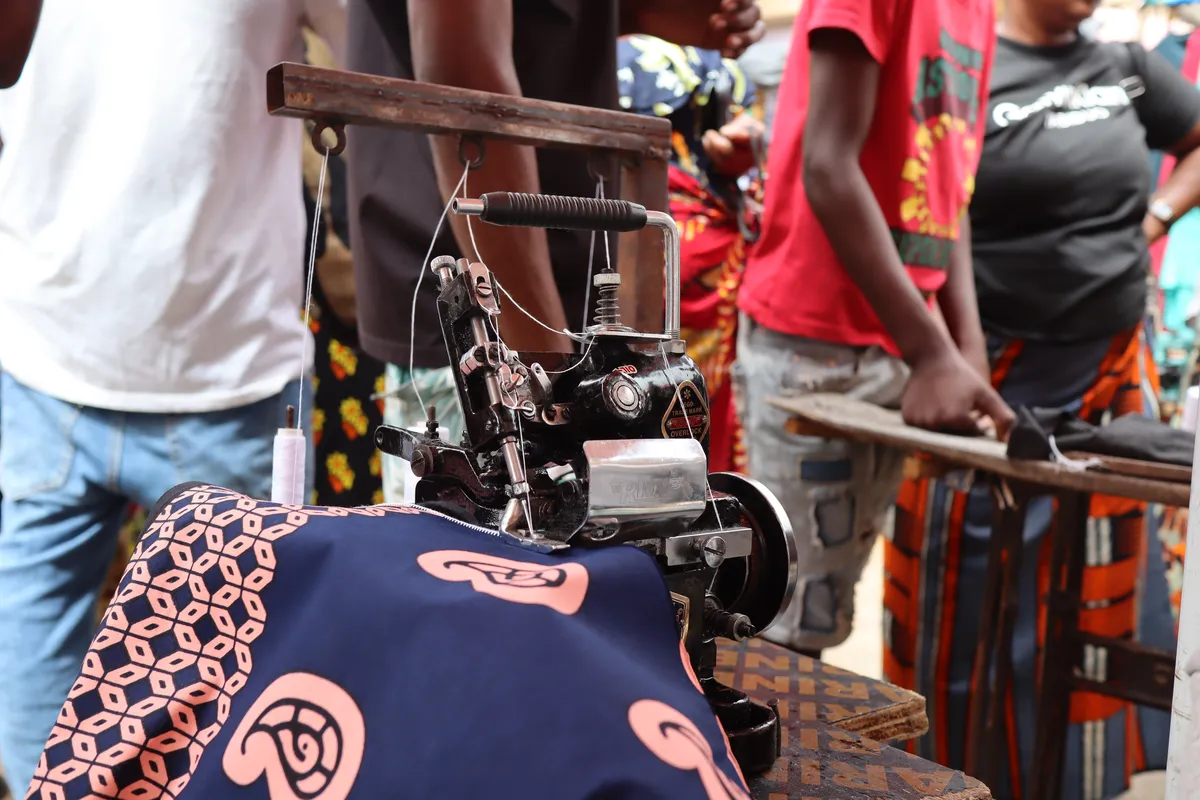
I am offered a chair behind the small sewing table and enjoy getting to watch the work without having to stand in the busy row of customers and sewers. I watch contentedly from my seat and snap some photos as they cut and sew my fabric for about 15 cents per side. The sewing machines all look like antiques, the one being used for my fabric having a logo which indicates it is from Dubai. I look at the ground and notice a web of extension cords which are all powering these street-vendor sewing machines. I imagine they probably pay a fee to the inside guys for using electricity or have some other mutual arrangement. With big smiles and a, "come back to me again next time" I am given my completed pieces and sent on my way. The six full capulana I purchased were sewn into four skirts and four headscarves. My plan is one for me, one for Amelia, one for her daughter, and then a bonus for contingency.
I walk back home standing even taller than on the former journey. I have navigated the procurement, purchase, and processing of this traditional fabric all on my own. Lately, I take time to recognize these small wins for myself and let them sink in. I store them in a special place for those times when I feel completely incompetent or that I have made no progress.
My next mission is special treats. I search a few different stores looking for a shelf stable dessert, as the celebration is in three days but I will be returning to Corrane tomorrow morning. I finally find some individually packaged cake slices at a middle eastern store that has a whole aisle of foreign desserts. I even see a few candies I recognize from my Romania days. The following morning, I travel back to Corrane by motorcycle and stop at the produce stalls on the way out of town to get a pineapple to complete the ladies-day spread. Fruit is rare to find in the village, and lately is just the occasional pile of bananas.
I deliver the capulanas to Amelia after class on the eve of women's day. I hadn't told her I was going to buy them, and I enjoy seeing how surprised she is. She tells me that her coworkers are all dressing matching, but that she didn't have the money to buy her set from their group. Somehow things here just have their own way of working out, just never in the way that you expect. During my walk through the village that day, many women greet me and remind me about the holiday tomorrow. As I walk by one of the administrative offices, I encounter a group that calls me over to ensure I will be attending the celebration tomorrow in the center of town. I was unaware there was an official village-wide party, but tell them that I will certainly be there. Eight o-clock they say, which here means more like 9:30. Amelia agrees that we will meet at the town square in the morning, dressed in our women's day best.
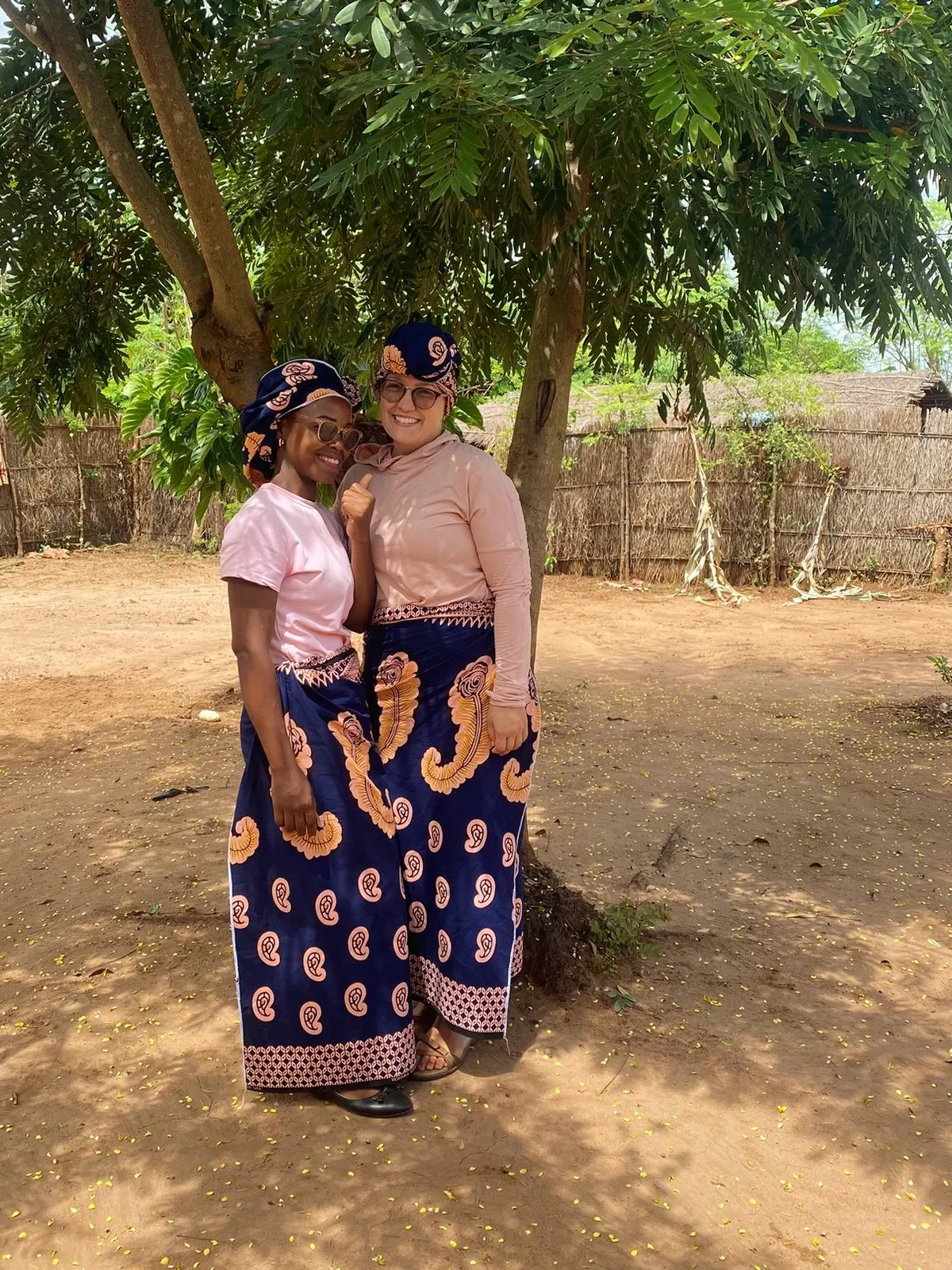
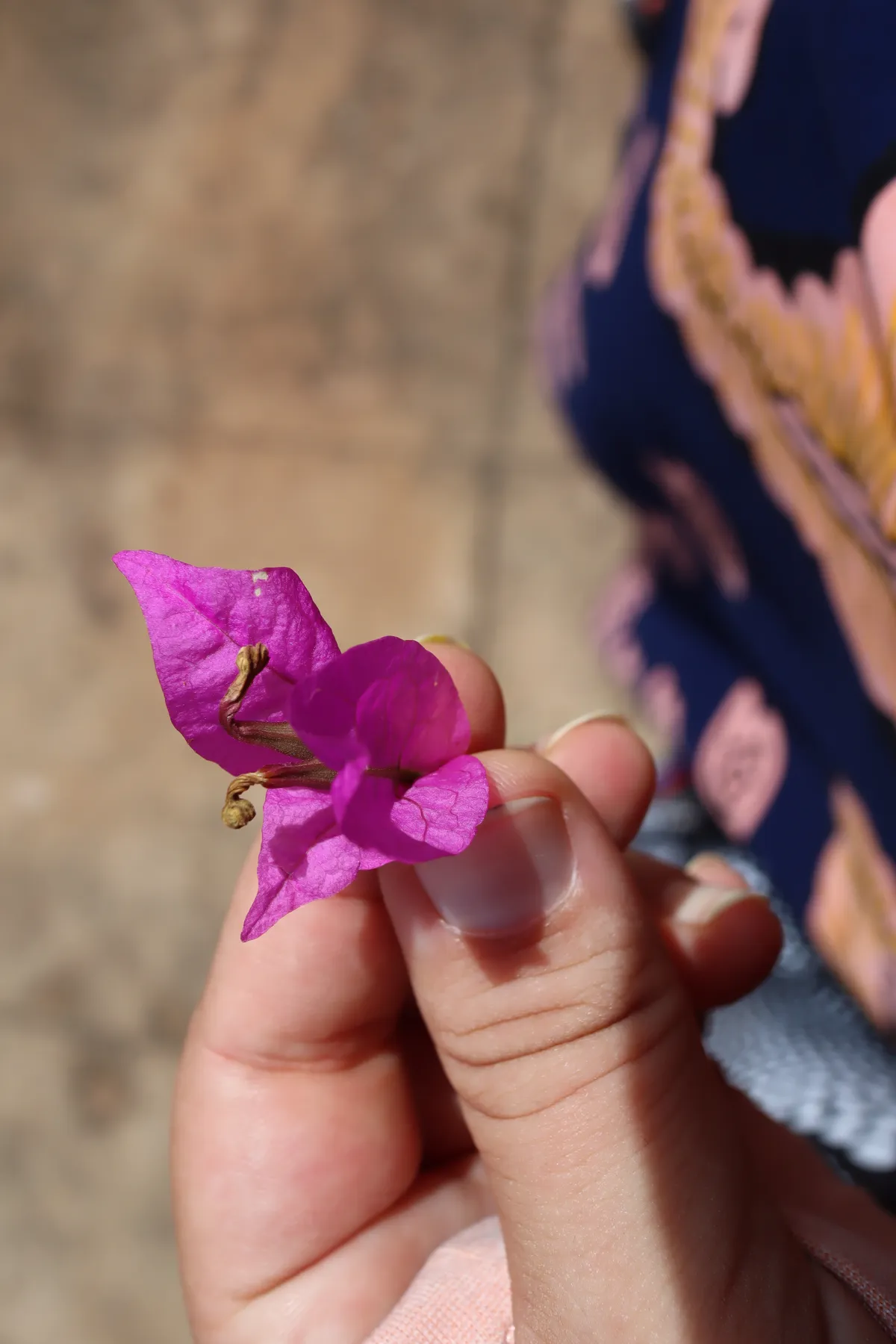
I get lots of compliments on my outfit during my morning walk into town on the big day. A couple of my usual moto drivers call me over as I pass the taxi tree, one of them asking who tied my headscarf. His surprised expression gives me an extra spark of joy when I say that I did it myself. I find Amelia walking up the road and we admire our matching garb. Her daughter is too sick to join for the celebration, but may stop by Sam's later for a few pictures and treats. The crowd around the center of town is steadily growing. Mostly women, but a few men as well. There are a few smaller groups of friends/sisters who have matching capulanas and then two larger groups. Some women have the traditional face paint, and many others don't. Everyone is handed a small flower for the ceremony later. After a bit of waiting in the shade (the town leader is running late), we all line up on either side of the small monument in the town square, the Mozambique flag flapping on the usually empty flagpole.
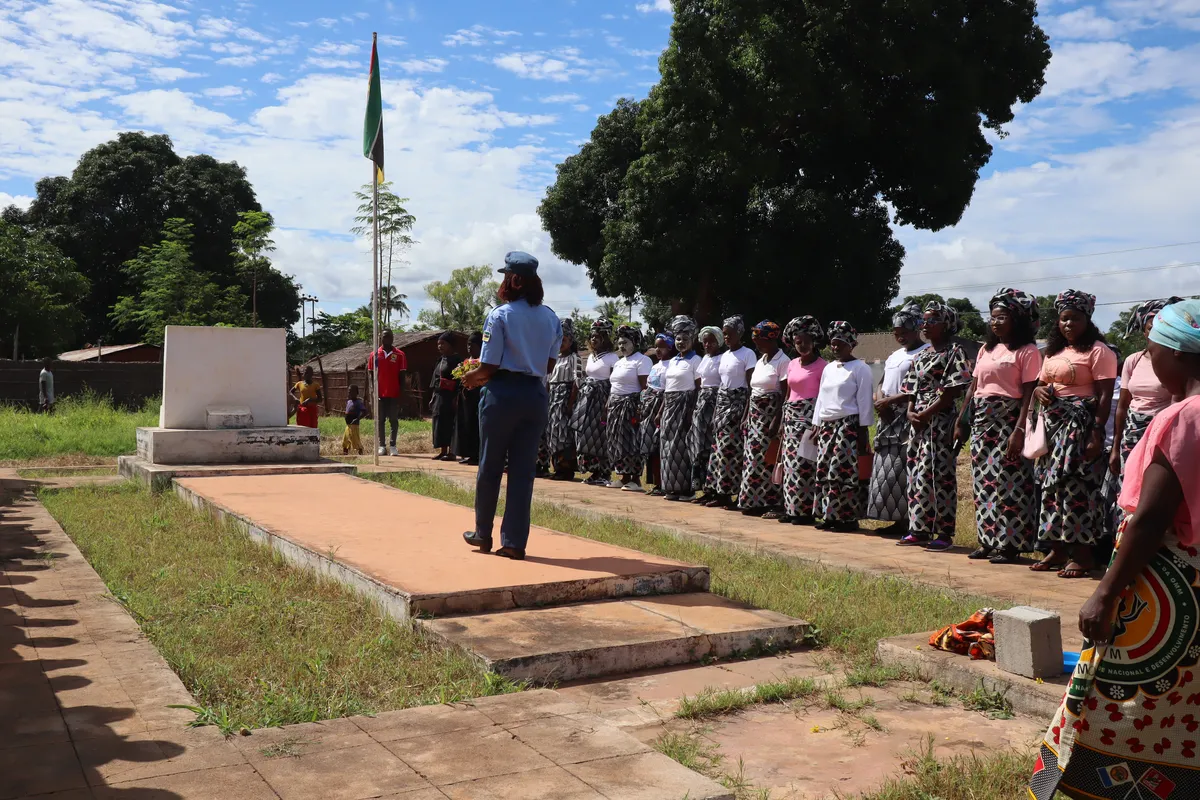
The village's four police officers march up the aisle in synchronized stomping-step. The three men stay standing at attention while our one female officer takes a large arrangement of flowers up to the monument and places it there as a sort of feminine shrine. Singing follows, which includes the national anthem and also the national women's day song, which has a surprising number of verses that many in the crowd know by heart. Then everyone lines up to place their flowers on the altar. After depositing the bloom on the altar, each person gets to personally greet the two female leaders of the village. After the flower ceremony, there are a few announcements and then everyone migrates to the community center across the road. It is a modest concrete structure, which has built-in concrete benches along three walls, and official seating along the other side. Leaders and VIPs sit in the special area, secondary VIPs get spots on the benches (this was my designation), and everyone else piles in on the ground or watches from outside of the structure.
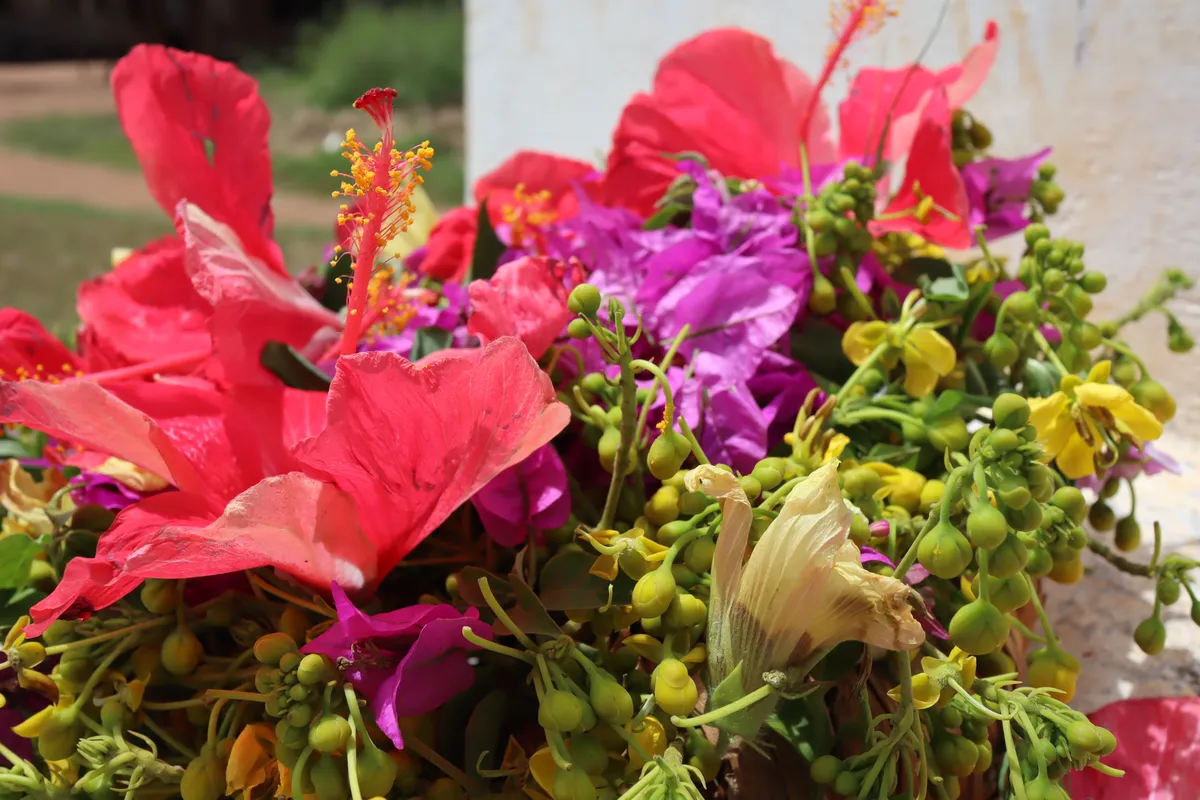
Singing, dancing, and other performances commence with huge support from the cheering crowd. The first number is a group of children dressed all to match, led in song and dance by a woman I assume is their school teacher. Then more performances from different groups of women, one of which included dancing with a large jump rope. Our view is quickly obscured by the growing crowd of floor-sitters in front of us who are much too excited to sit down. I climb up to stand on the bench along with many of my fellow onlookers and get a birdseye view of the scene. Some of the crowd is singing, chanting, and clapping along. Announcements made by the MC indicate a full day of scheduled activities all the way until midnight. These include more cultural performances as well as multiple different women's sports events. We leave after about an hour to go have our own private little party at Sam’s house.
We sit at Sam's and meet up with Amelia’s daughter who is struggling with a bad cough, but still looks quite glam in her matching outfit. She is usually very shy and quiet around me, which is a sign of respect here. Today is no different, she barely meets my gaze but I know that she feels pretty special that we get to match. We sit on a grass mat on Sam’s porch and enjoy our cake and pineapple. We chat a little, but mostly sit in the quiet breeze of the afternoon and enjoy the shade. We play a few songs on our phones and enjoy each other’s company. Amelia has this amazing sense for people, and can tell how tired I am after the big morning party. One aspect of village culture I like here is that talking isn't always expected or necessary. Especially during afternoon rest, people are often very content to sit quietly. We soak in each other’s presence and I let my mind go mostly blank in the peacefulness.
Over the next few days, I spend more time reflecting on both of my women's day experiences. I am still working on how to present myself here as a woman. How to dress, how to speak, how to carry myself, how to command respect from men. These are skills typically learned through girlhood in one’s home culture, shaped by mothers and other female mentors. I find myself fortunate to have a community of women to live within here and also a strong female mentor. They continue to guide me through my process of learning to be a woman in this culture, sometimes through overt teaching, but usually by example. This immersionship experience continues to shape how I view my own femininity and how I experience womanhood. Although it has not been without its challenges, I am very happy to be amongst some very strong women to support me. They not only have the strength to bear the emotional burdens that come along with rural African living, they also carry the literal weight of this community - the water and the crops on their heads and the babies on their backs. My curious imagination wonders how I will look and feel one year from now on my second season of women in Africa.
Drums
Rhythm deeper than I can reach
Past the touchable and even the
thinkable places. Older than the
Encoded instructions in my cells.
More divine than any one deity.
A holy ancient rhythm which has
Sustained all women, aligned and
Unified them. A beat which can
Only be heard inside.