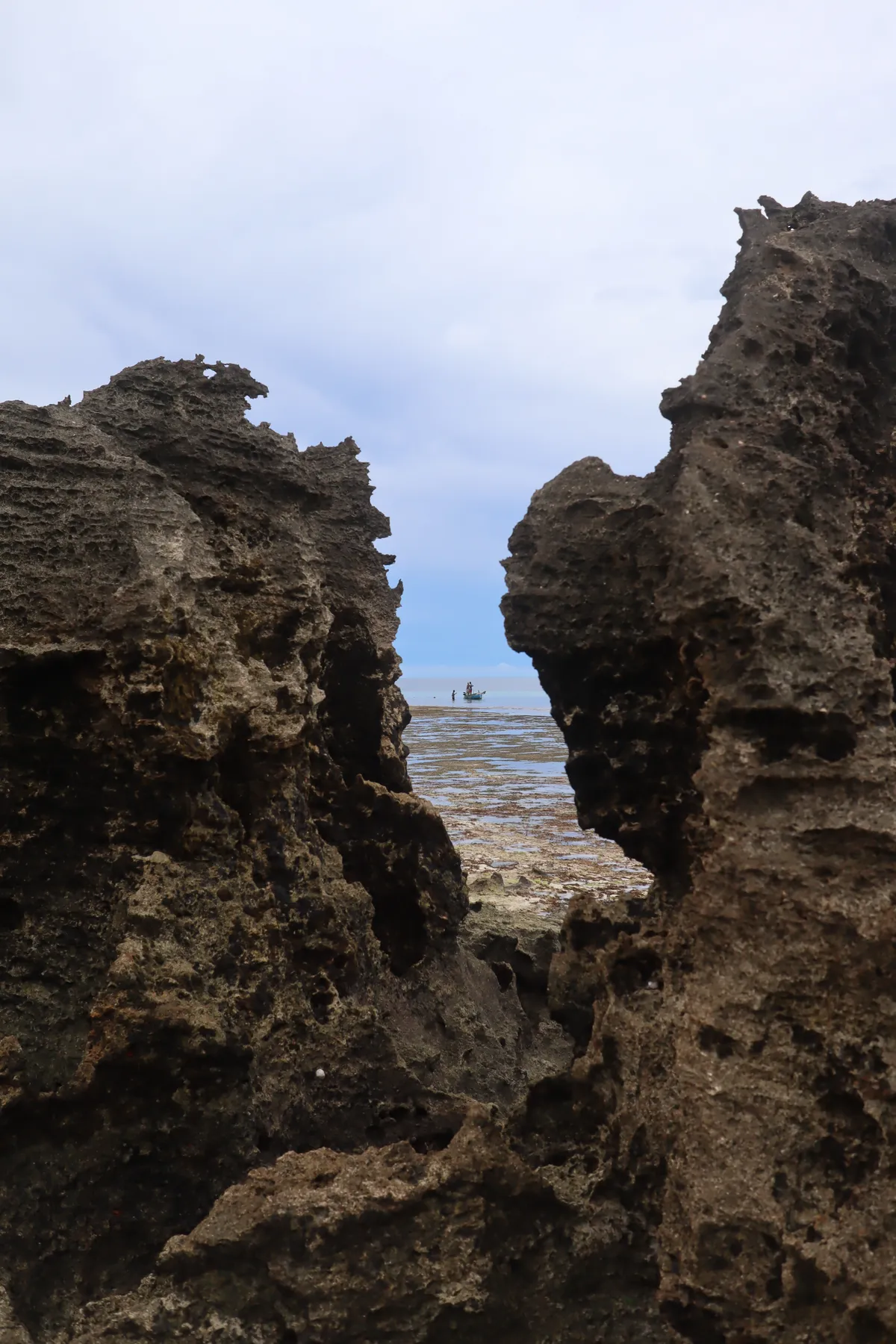
Island
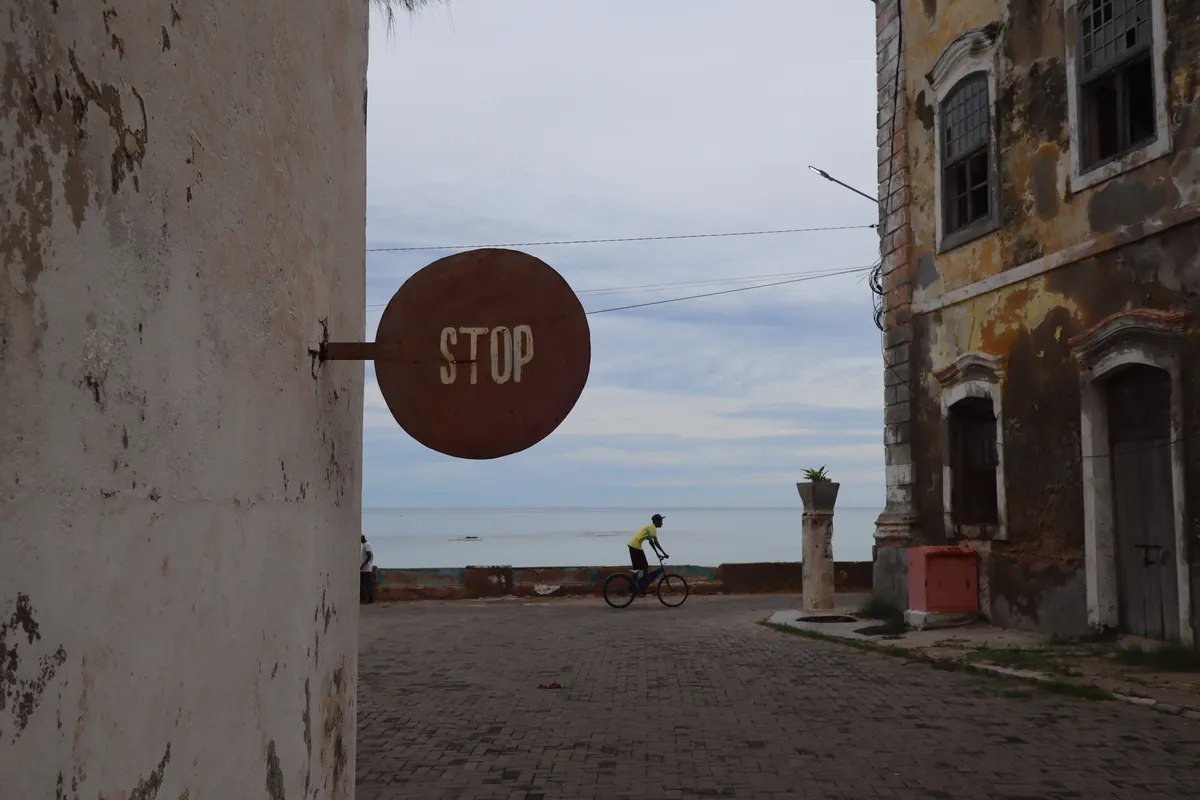
Twice already since moving to Mozambique, I have had the chance to visit a place known locally as "Island" or by its whole name, Island of Mozambique. The Island was the capital of Portuguese East Africa from 1507-1898 and served as a crucial trade hub connecting intercontinental sailing routes since the 10th century. It is a place which was on everyone's way around the horn of Africa for over 1,000 years. The resulting political, cultural, and architectural significance flaunts a unique mixture of European, Arab, Indian, and African influence which has been preserved over the years through partnership of the Mozambique government and the UNESCO World Heritage Convention.
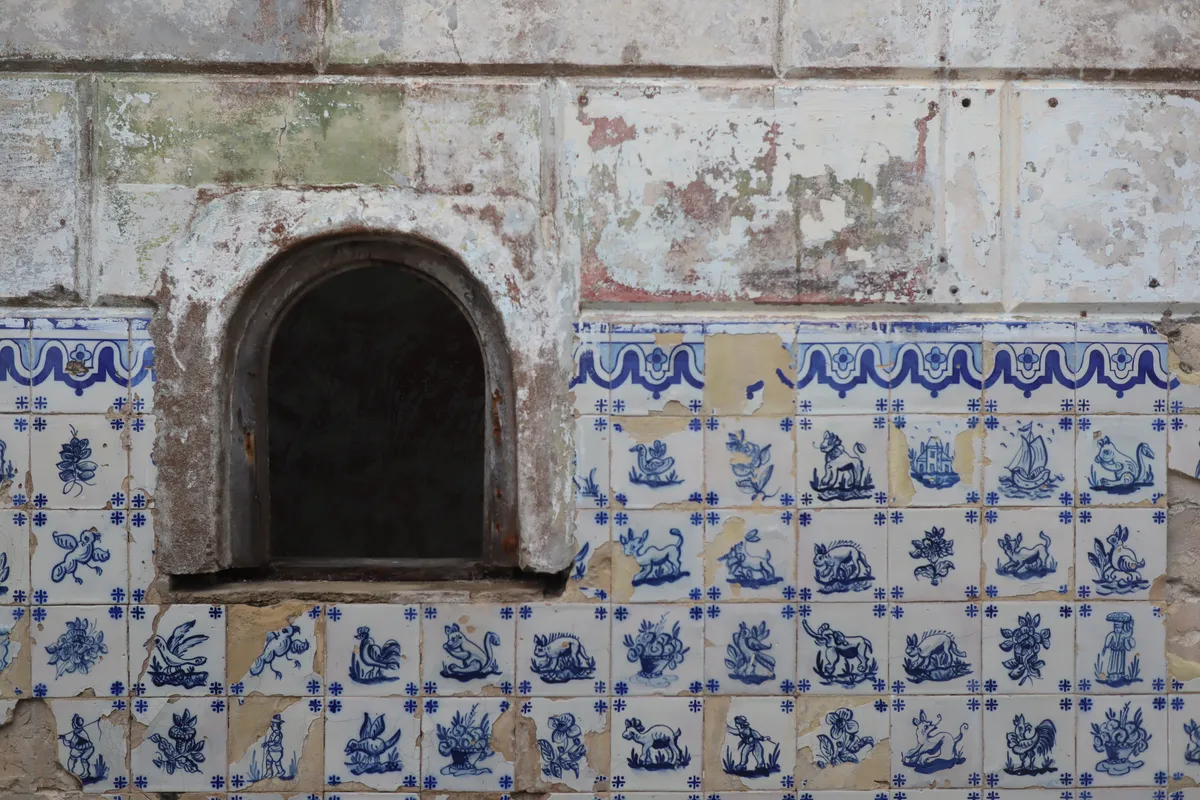
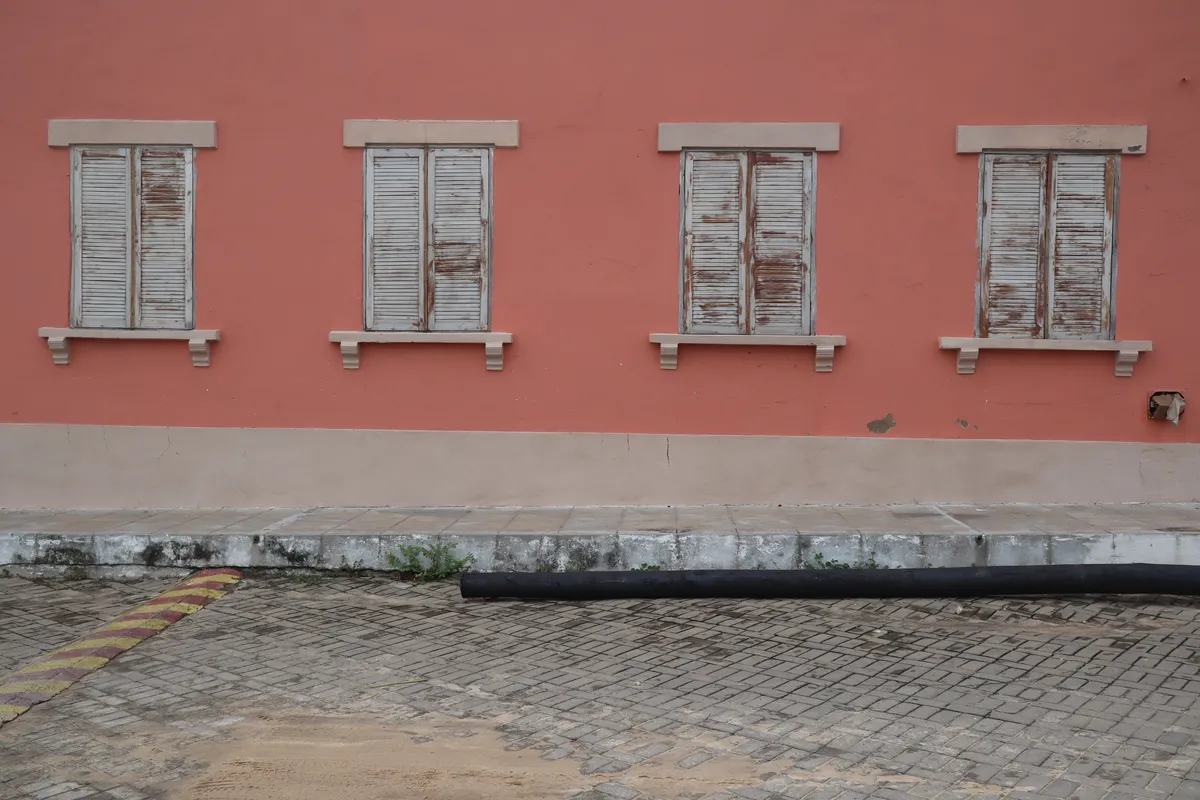
Upon my first visit, I was agape at the beauty of the place. We had just celebrated Christmas in a coastal town about an hour south of the Island and took a day trip there for lunch and sightseeing. I had been told of the Island's beauty, but was unprepared for what I encountered when I arrived. Meticulously cobblestoned streets meandered across the small 3km long island, lined by European-style buildings with ornate archways and decorative sculptural work. Despite the crumbling nature of many of the structures due to centuries of sweltering heat and unforgiving cyclones, there is an indescribable charm of this place which has managed to stay standing. The ruined nature of some buildings only made them seem more beautiful to me. Every direction I looked, I saw a photograph waiting to be captured. Brightly colored houses and shops, alleyways overgrown with vines and trees, the once elegant barrier between the promenade and the ocean barely still intact.
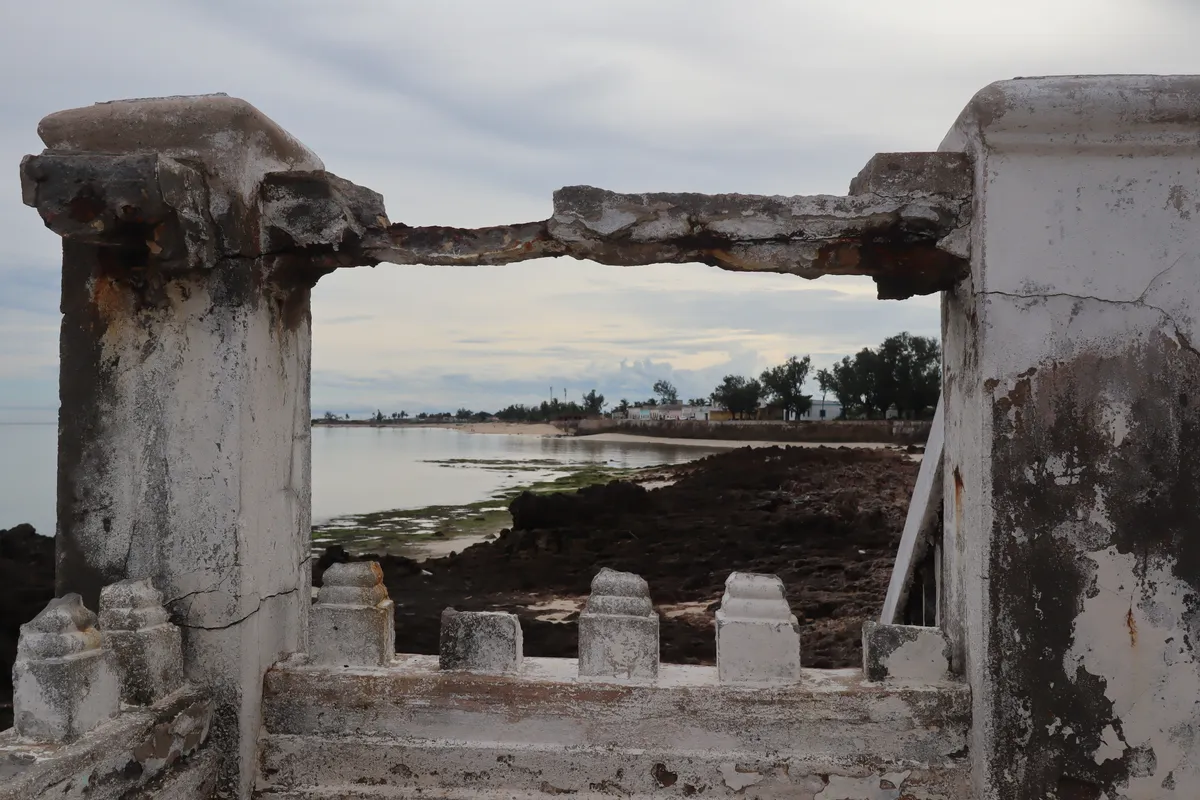
I captured a lot of photos on my short first visit, which only had enough time for lunch at a local restaurant and a stroll to the art market on the pier. My eyes drank in the beauty of the European style juxtaposed against the Indian Ocean. It was reminiscent of my childhood trips to Mediterranean destinations, but overlayed by African art and food. There is quite a bit of tourism on the Island, but it is also home to a large community of Makhua locals who are a mixture of Muslim and Christian. We are approached anywhere we walk, sit, or stand by local artisans selling handmade jewelry and other souvenirs. We take in the views, buy a few trinkets, and then are on our way back. Barely enough time to appreciate the place, but certainly enough for it to leave a strong impression on me. Its otherworldness left me with awe and also an unnameable, unsettling feeling that I wanted to unearth.
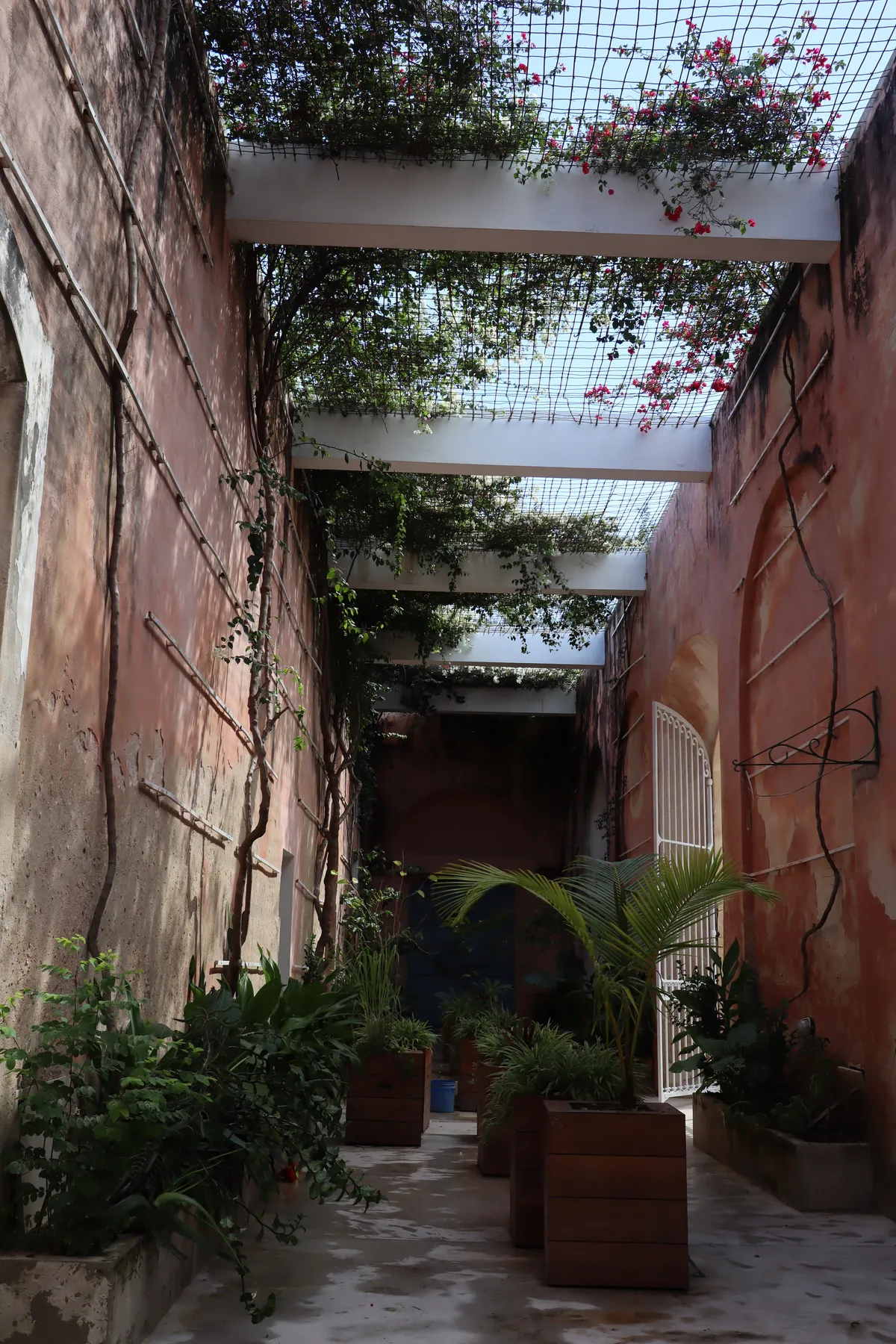
Fast forward two months and I am again afforded the generosity to share someone else's travel plans. This time I am joining the owner of the farm outside my village along with his daughter, his business partner, and my colleague Sam. After getting some directions from locals, which included a young teen hopping in the bed of the truck to shout out where to go, we arrive at our guest house. It is a beautiful building with a large interior courtyard impeccably landscaped with a variety of plants. As we walk through the space, I feel like a wealthy tourist walking into an Italian villa. We are guided to our entrance, which reveals a huge four bedroom, four bathroom house with a full kitchen. This decor and the view rival the modern upscale Hawaiian home rentals I have visited as a nanny to the rich, while still somehow maintaining hundreds of years of historic charm. Our private veranda has another full dining area as well as a small soaking pool and beach chairs for taking in the panoramic view. We also have access to a boat ramp which leads to our own private little sliver of the Indian Ocean.
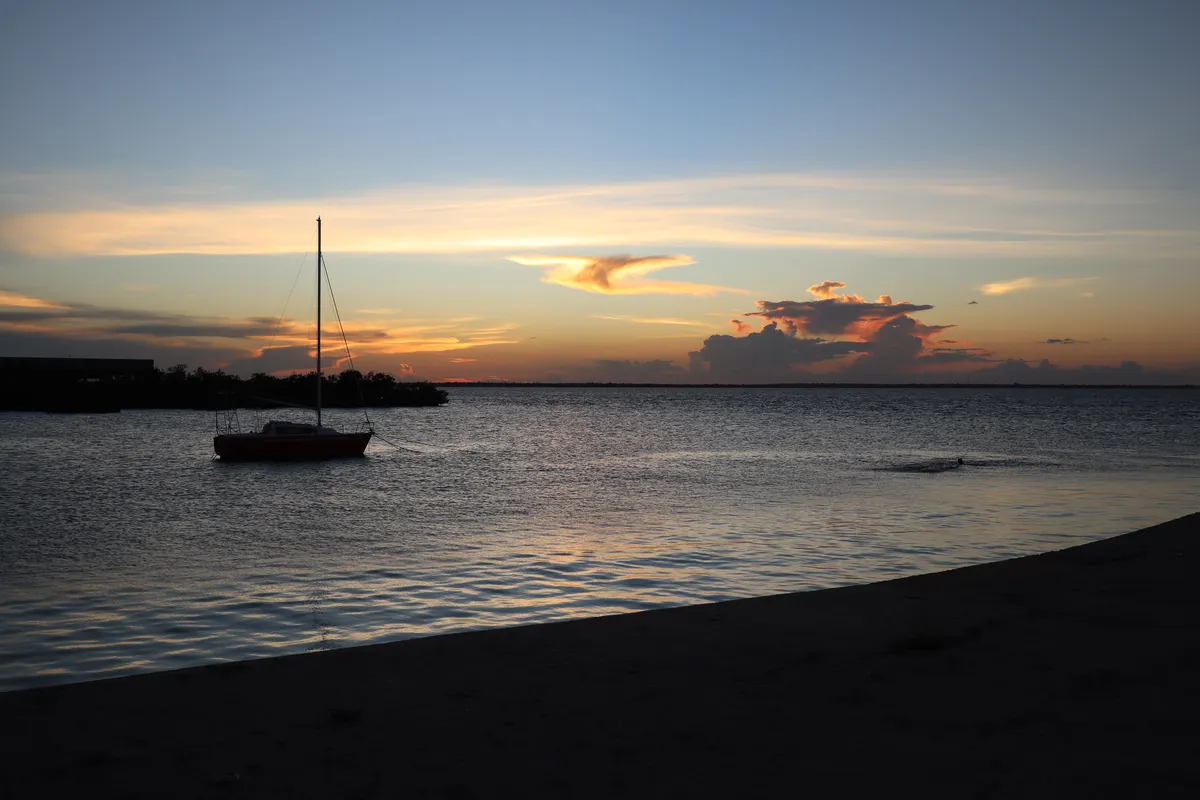
I am struck again with awe. I would be impressed with this place if travelling from my house in Portland, but coming here from our rural village lifestyle is enough to make me a little dizzy. I load the refrigerator (what a luxury!) with the groceries I bought in Nampula and do my typical review of the drawers and cupboards to familiarize myself with the kitchen. I am giddy with the thought of cooking breakfast in the morning. We get settled in and I take a deep breath of the salty breeze coming in through my ocean view window. How does my life take me to places such as these? I get into my swimsuit and go for a swim in the ocean, watching the sunset from the water. I take a moment of gratitude as I think about my friends in the village who have never gotten to see the Indian Ocean despite living so close to it.
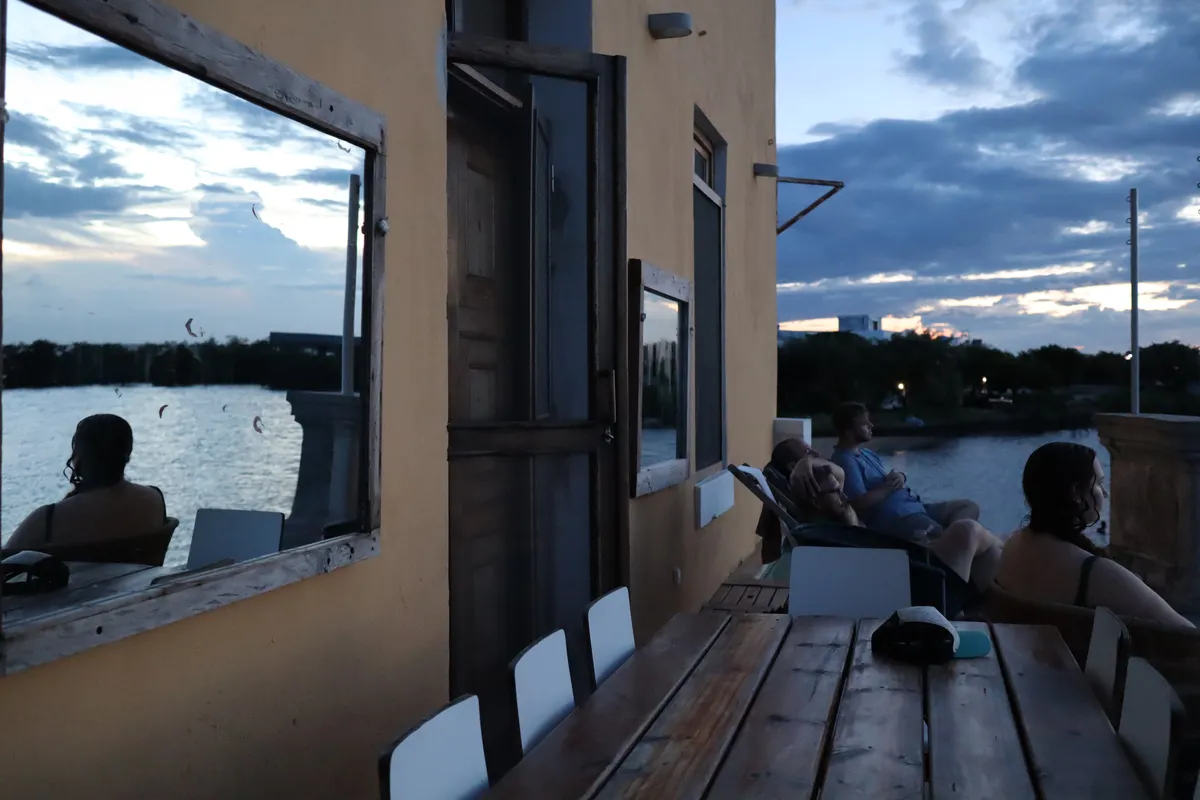
After dinner a few blocks away, we return to the house to commence the evening of drinking whiskey, smoking cigars, and playing cards. We settle deeper into conversation the deeper we go into the bottle and into the night. Eventually it is only Josh and me awake and we lay outside on the veranda staring up into the stars. We talk a little about time and aliens, but mostly lay in silence, letting the sound of the receding tide take our thoughts out into the universe. I find myself calm and glad, but also plagued by some other darker feeling that is hard to identify. We say our goodnights when the mosquitoes come for us and I find a deep, short sleep.
Only a few hours later I am cooking up french toast served with chilled papaya and hot coffee. We eat outside overlooking the low tide which has hundreds of locals out in the tidepools harvesting various sea life. I think about the reality of their morning as I sip my coffee, perched above them in my pajamas. After a slow and lazy start to the day, we venture out for an afternoon of historical and cultural exploration. We start at the Island museum, which is right across the street from where we are staying. The bright red building has a huge bell tower which was under restoration during my last visit. We are able to take some pictures in the interior courtyard, which includes a few artifacts and statues. However, photography inside the museum itself was not permitted.
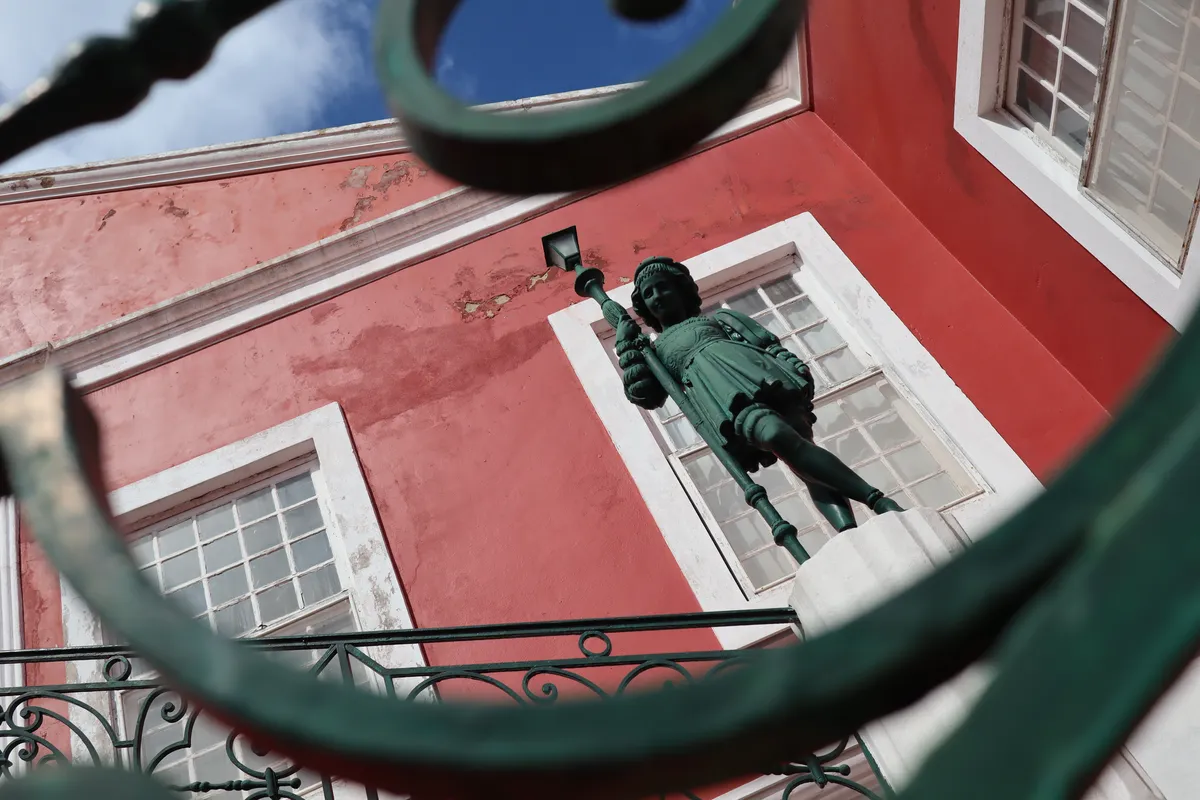
We are on a private tour with a guide who speaks English and we are the only patrons there. The museum was originally the residence of the governor and reveals itself upon entry to be more of a palace than just a home. We are directed to remove our shoes at the entrance in order to preserve the floors and carpets, which are all original. This is my first barefoot museum experience, which makes the tour feel much more intimate.
The palace boasts beautiful furnishings and art which were brought from all over the world. Chinese porcelain vases, Portuguese paintings, huge tapestries both local and foreign, intricately carved wooden furniture from south Asia and the middle east. We see the contraptions used to carry the governor and his wife around the city, designed with long wooden poles on each end of a little booth which were carried by eight men each. We get to see the kitchen where traditional and modern cooking tools are displayed as well as old photographs of prominent employees. Having already seen the large dining room with stately table for hosting, I imagine the team of cooks preparing feasts for visiting dignitaries in this space. It makes me wonder if it was a menu of food which was a fusion of African ingredients used to make European meals. This place was the intersection of four continents of trade, and I imagine the flavors were incredible. Hand painted porcelain dishes are displayed on the walls and in glass cabinets. I imagine them packed into crates to be brought by sea from across the world, used countless times in this palace, and now hung on these walls as their final resting place. They look beautifully exhausted.
Despite this being the home of the governor, there is an unnerving emphasis on the king. Hallways hold huge painted portraits of each king of Portugal held in gaudy frames. The most ornately furnished and decorated rooms are those which were specifically designed for the use of the king, should he ever choose to visit. There is a separate sitting room, separate office, and separate bedroom, all reserved only for the king (and queen, with a separate bed).
We are taken into the king's sitting room, which is furnished throughout with intricately carved wooden furniture. The matching set includes the end tables, couches, and other pieces in the room which all gleam beautifully bathed in the natural light of the afternoon. They have clearly been sealed and polished consistently since their heyday, as they are in perfect condition. My eyes cannot seem to look away from their artistry. Each chair and table appears to originate from a single piece of wood, and is carved to a level of symmetry, detail, and beauty which I have not seen even in my tours of European castles.
Our guide is pointing out different art pieces in the room and then mentions the furniture, which was carved by expert craftsmen in India. He says that the furniture in this room holds a "sad story" and goes on to explain that in order to ensure the furniture could never be replicated for any other royal, all the artists' hands were cut off once the pieces were complete. The awe I am experiencing is quickly clouded by despair, the beauty brutalized by cruelty. As we pass through the bedroom and office a few minutes later the guide tells us that in the 139 years this building housed the governor, none of the kings ever visited. None of the rooms ever used. None of the furniture ever touched except by their creators, their carriers, and their cleaners.
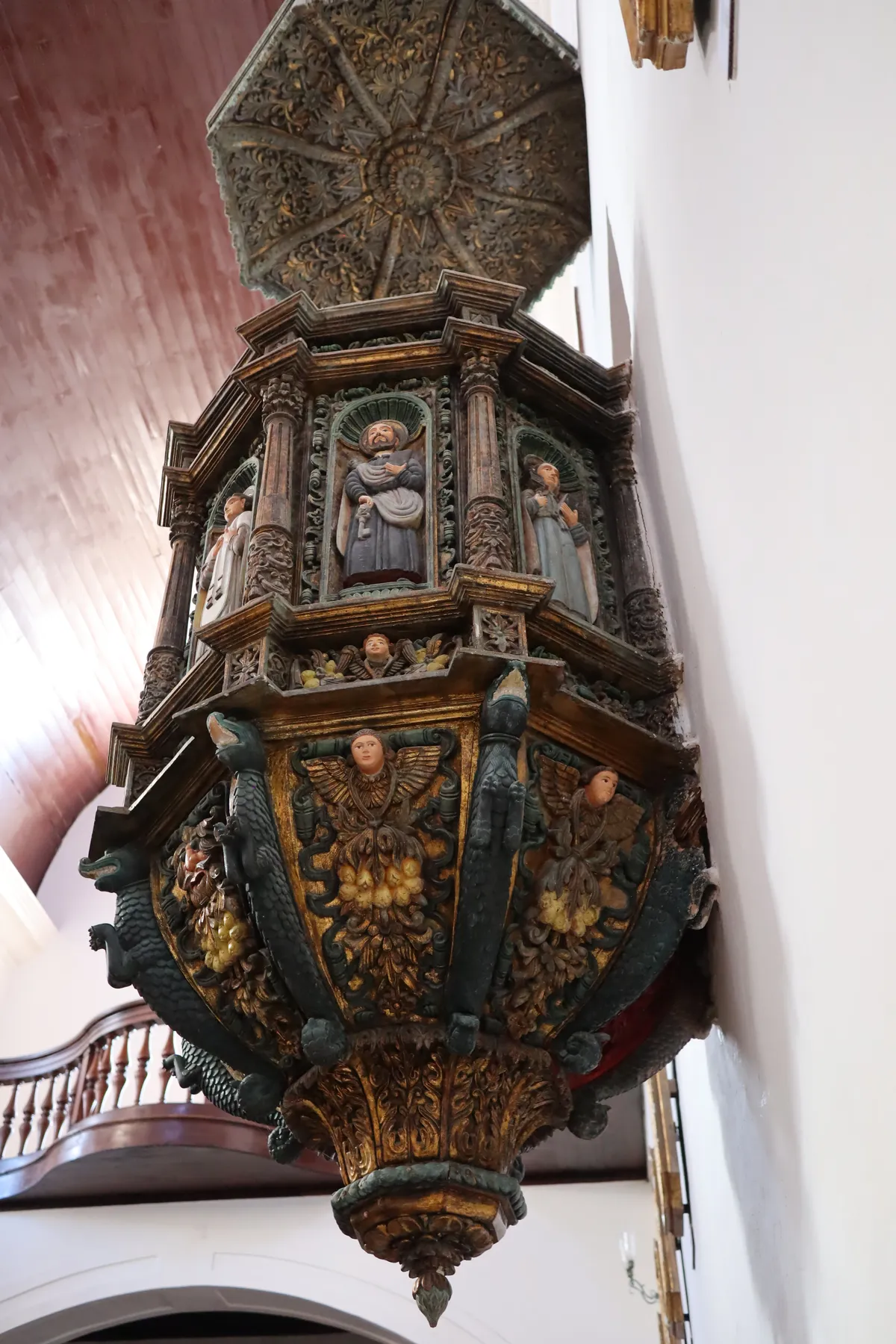
More hallways with more paintings show battles, conquests, people, places. I am still thinking about the handless men who carved that furniture and am only half-listening to all the lore being told by our knowledgeable tour guide. A lot of lore is about the kings, which I struggle to care about. They look down on us from their paintings looking pathetic. I think about them making decisions about things that happen here in Mozambique all the way from Portugal, never bothering to lay eyes on their colony. It evokes thoughts of world leaders, corporate CEOs, and government officials who wield their power so often blind to the realities of those who bear the consequences of their decisions, their moods and whims. We end the tour at the church sanctuary which is attached to the residence. Here we are permitted to take pictures, and I admire the woodwork of the suspended pulpit. There are also paintings and other pieces of art. Here we also encounter some vendors selling local crafts.
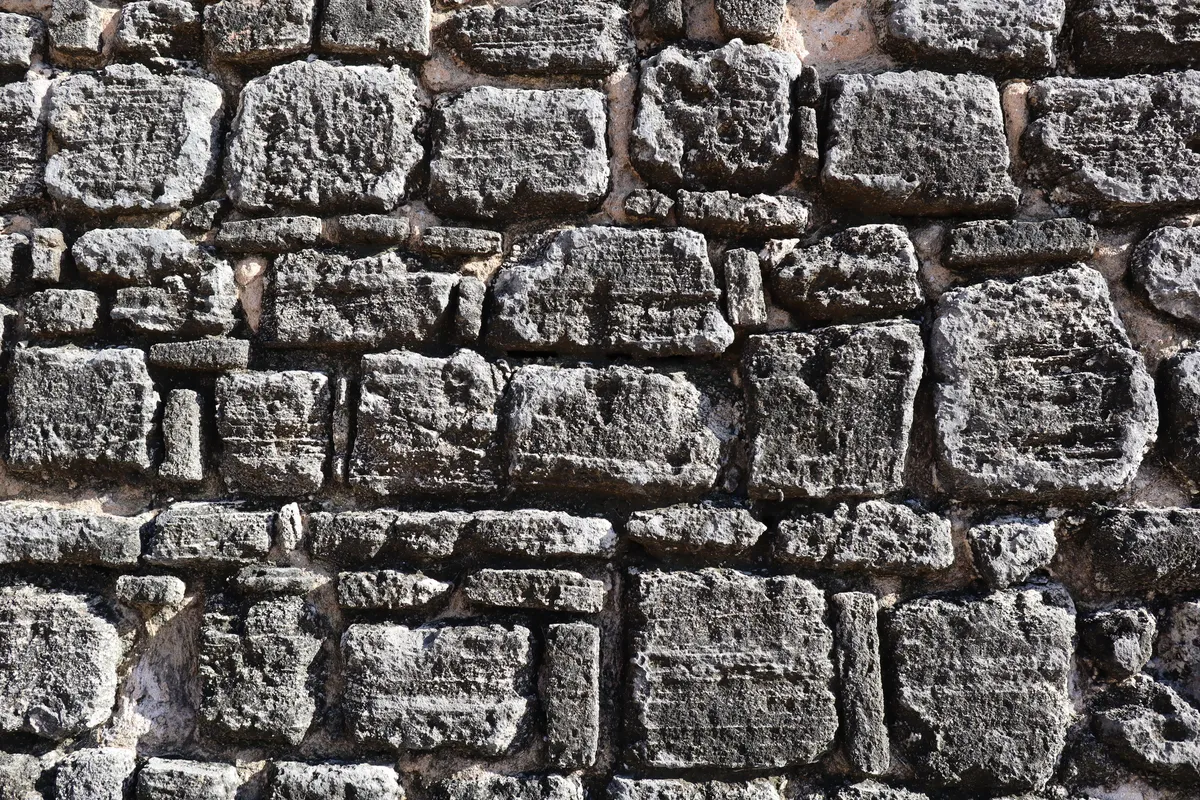
After the museum we take a 20 minute walk to the fortress down the road. This is the oldest standing fortress in sub Saharan Africa and it is massive. It took the Portuguese 50 years to build it, or let's be real, watch the Africans build it. It was the first line of defense when opposing colonial forces attempted to overtake Portugal's position at this essential port, which the British and Dutch attempted multiple times. It was also the site where slaves passed through as they were sold to the foreign interests of the world, mostly the French Caribbean and Brazil but also to other parts of the Americas. Our tour guide takes us through the vast rooms and passages inside the fort, which could house thousands of soldiers at one time. As the tour progresses I purposefully fall behind the group so that I can walk independently through the space. Although I did miss out on the narration of history, my mind was racing and I was content to walk through the fortress and take in its energy through my own senses.
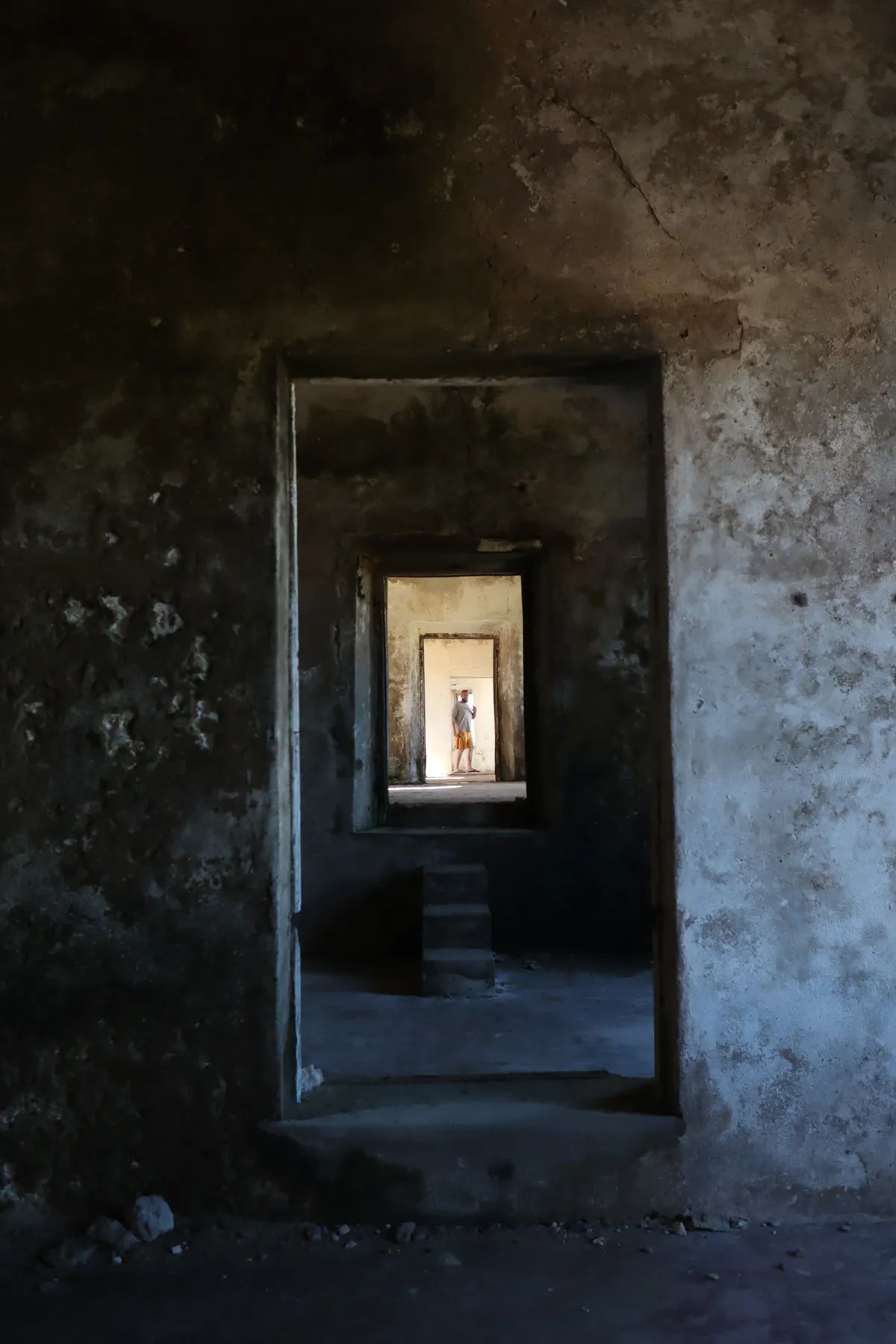
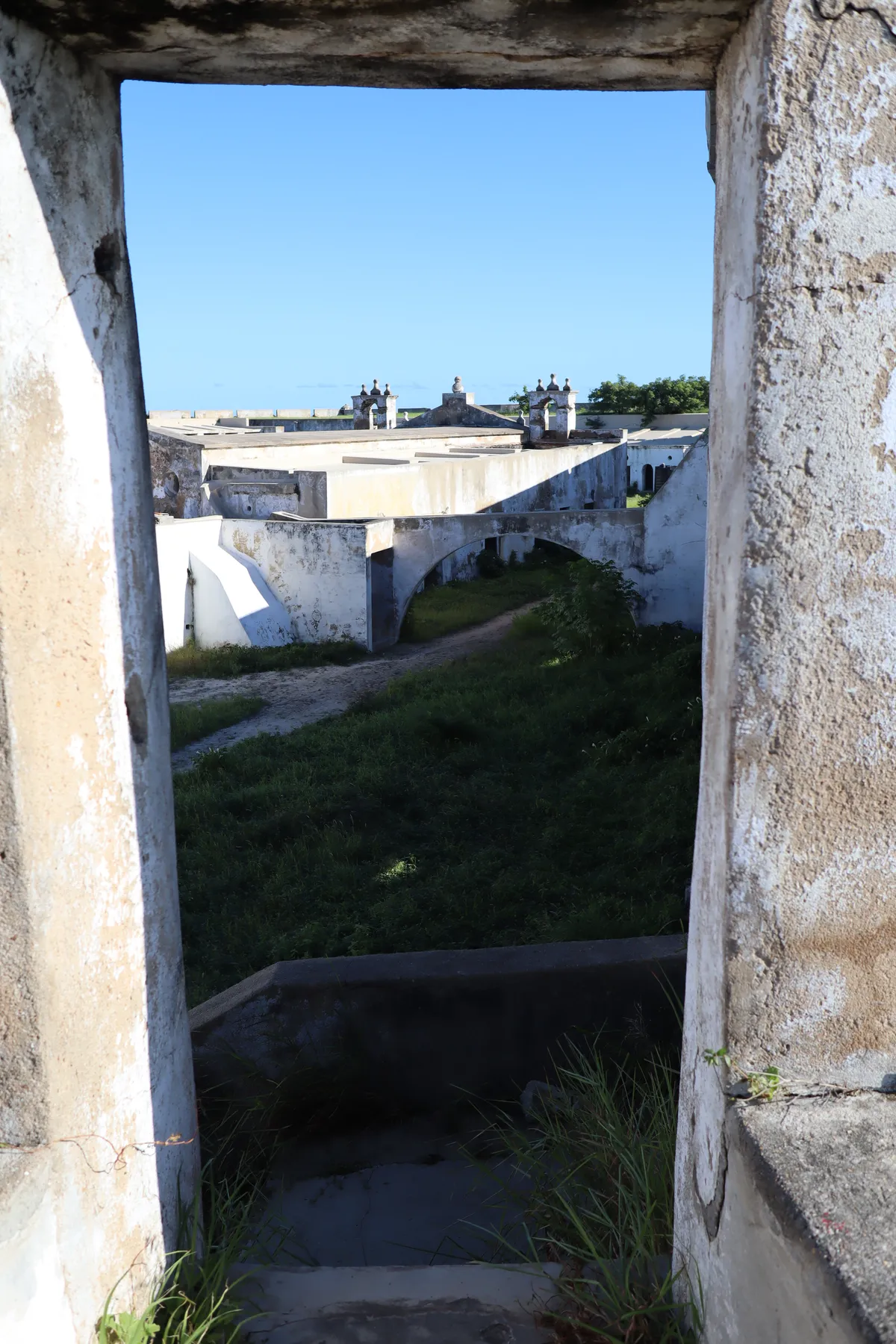
I wander through some passageways and find the kitchen, which is not much more than a wide hallway lined with stone ledges and a large hearth. I find winding steps which lead to doorways and doorways which lead to more little passages that twist their way around to the top. The place is somewhat of a maze, and I imagine thousands of soldiers milling through the walkways.
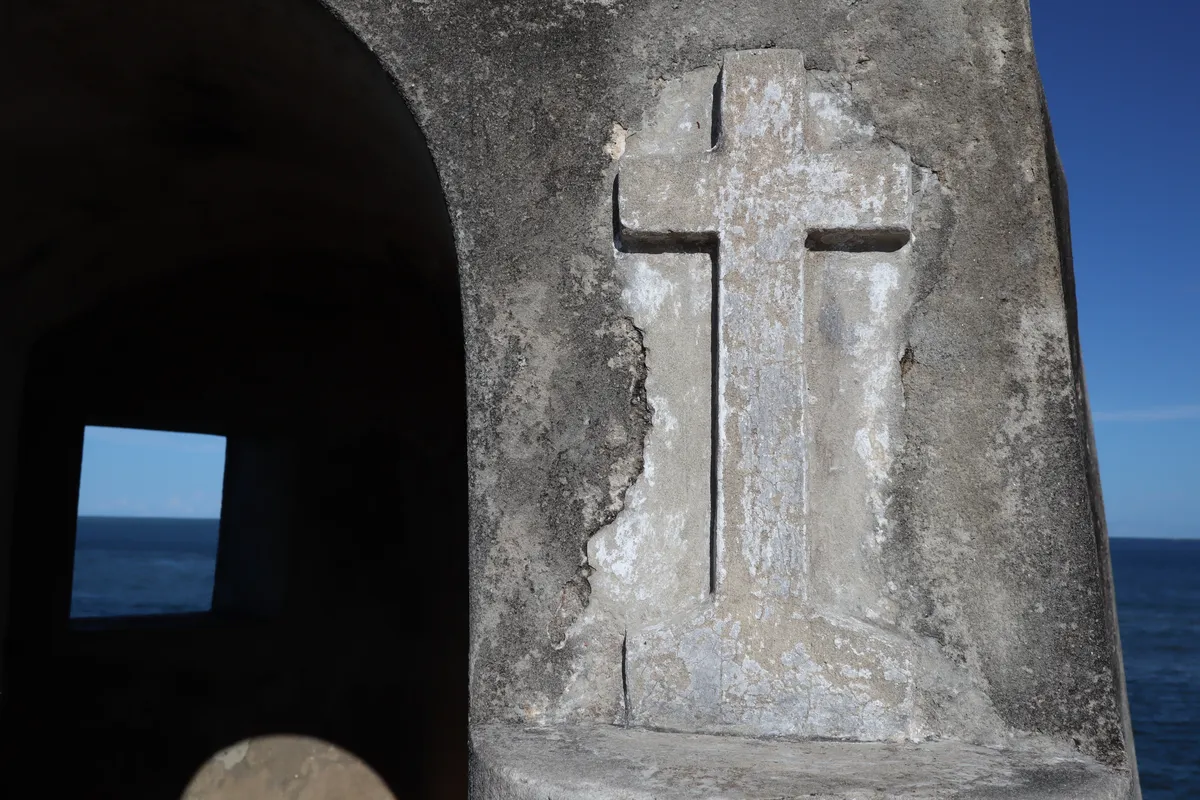
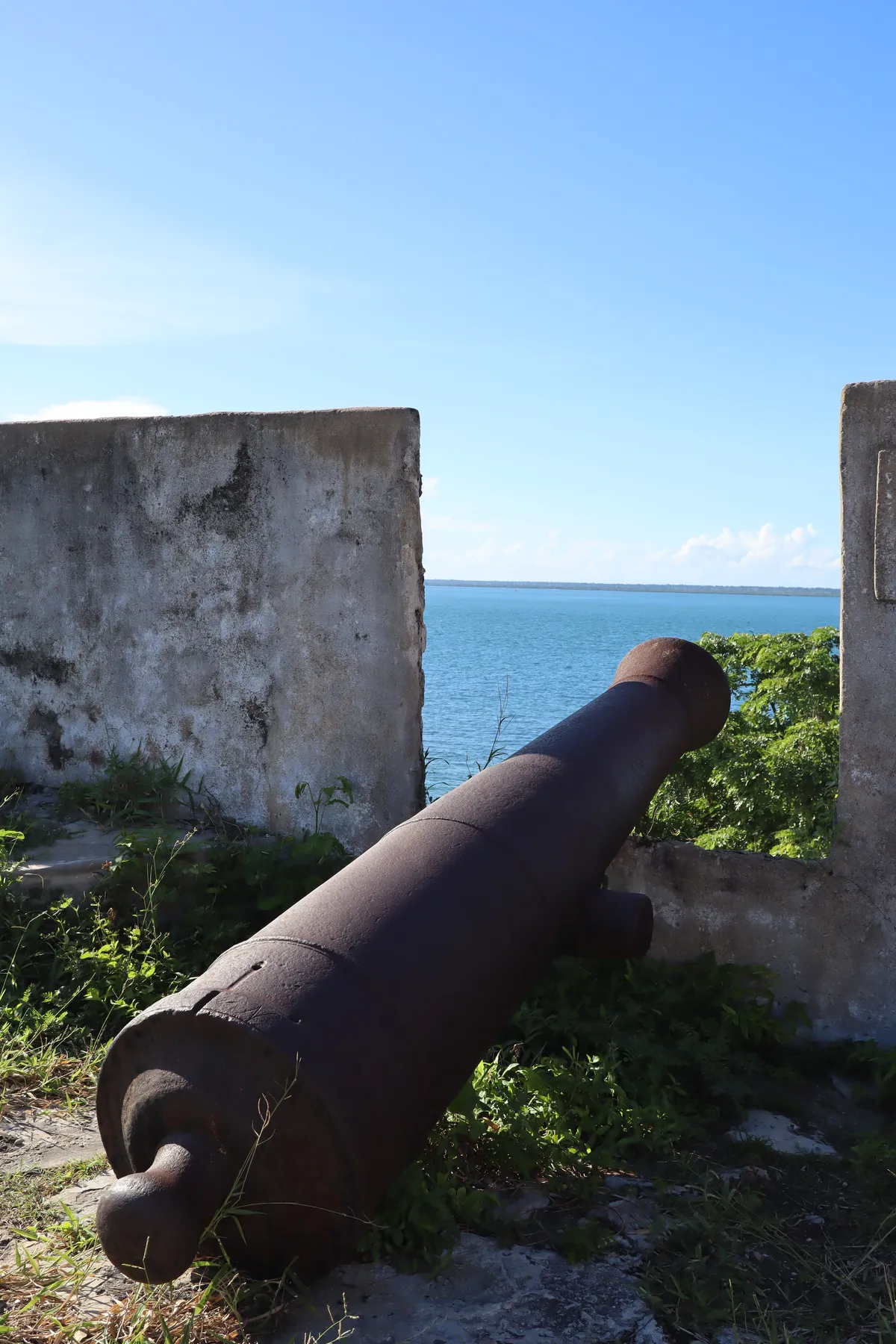
We climb to the top and see old cannons still pointing out to sea in all directions. I stand in a corner watch tower and look out through the small square window imagining a soldier stationed here all day in the heat, watching the horizon for enemies. I ponder what they might think about all day as they watched the tide come in and out, saw ships come and go with spices, goods, and slaves. What would it have been like for those Portuguese soldiers to be stationed in this African colony so far from everything they have ever known?
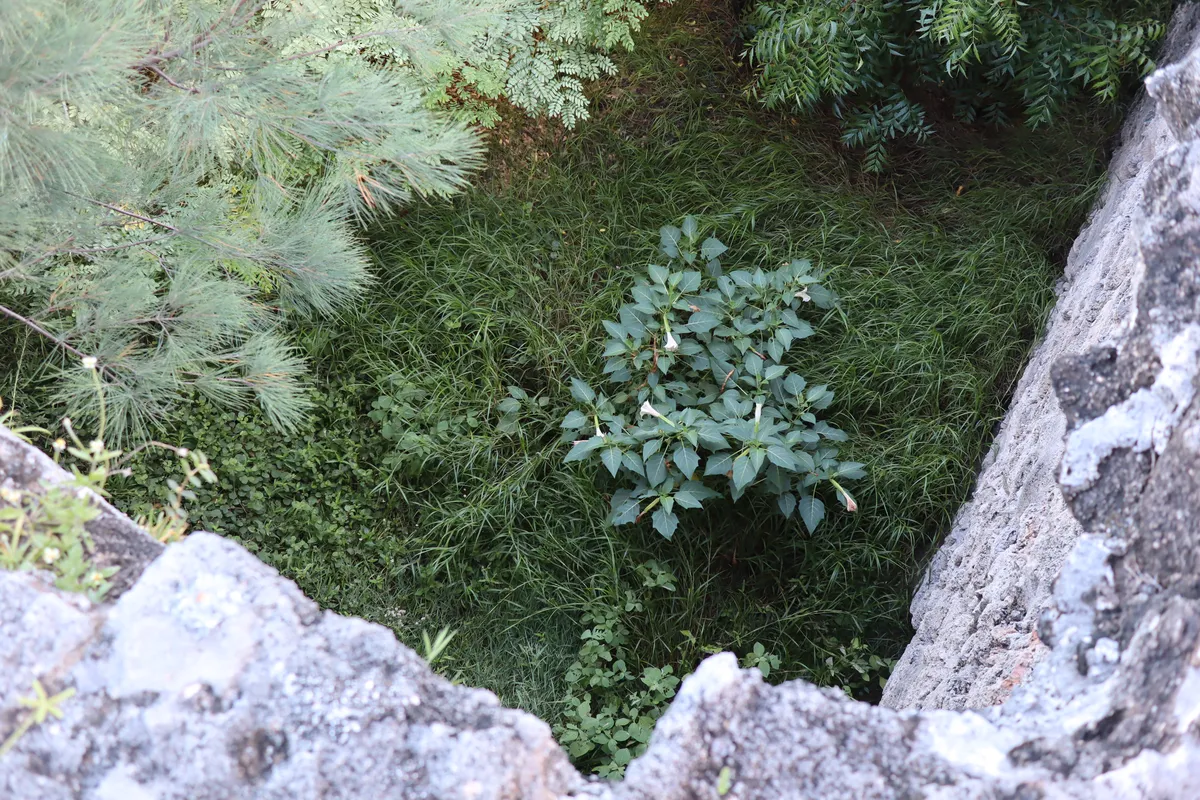
I catch up with the group as we are finishing up the tour of the top of the fortress. We make our way around the last bend where we look down into a large square pit, the bottom of which is overgrown with trees and bushes. The guide explains that this was the prisoners holding area. I picture men and women cramped into the pit, starving and wounded, either trying to survive or praying for death. In the rainy season, the place would be a muddy mess of filth, the open top offering no shelter from rain or sun. I find a shady spot off to the side and sit on a rock, staring down for a few moments into the depths of the prison. It looks so beautiful now, a wild patch of earth with flowering bushes slowly covering the bottom and a tree which may in a few years reach the top of the pit. This fort, which was the pinnacle of the colony's power, was also the epicenter of suffering for the island. The pit radiates memories of pain and hopelessness, enshrined by an untended garden.
I am lost deep in thoughts of colonialism's cruelty as we descend the steps and hear about the advanced water system they had at the fort. Technology ahead of its time which provided an aqueduct of running water under and through the fort in a series of pipeline trenches. We get to see the cavernous room which was the holding tank of water. I can't help but think of the scene in Dune when they show the "graveyard" pool of water, as the enclosed stone space here in the fort evokes a similar eerie feeling. We thank the guide for his time and begin our trek back into town. Throughout our time in the fort and in the museum, we have been the only white people present. There are a fair few locals walking through the fort on the ground level as there seem to be functional offices and dwellings in the expansive courtyard. We see people carrying water and doing landscaping work. Everyone gives long stares as we pass by.
We find a little bar on the beach just nearby the fort and stop to drink water and watch the ocean for a bit. I am silently processing everything seen, heard, and felt over the last three hours. In our group there are three Americans, one Dutch, and one Brit. It is an interesting mixture of histories, colonialism, and slavery represented at the table. The Dutchman and the Brit begin discussing more history of the site as they are googling the battles their countries fought here and also other battles where they fought each other. I think about how many men must have died in this swath of ocean in front of me as I see the waves slap against the stronghold and look out to the expanse of the horizon. I can't help but imagine the realities of those men sailing all the way from Britain or The Netherlands, just to arrive and be sunk by cannonballs. I imagine the realities of the hundreds of thousands of slaves who were taken from all over Mozambique and brought here to be shipped and sold. So many humans and stories lost to time.
We take a detour on the way home, admiring local trees as we walk through the city park. The greenery on the Island has a maintained yet untamed quality, much like the buildings here. With the passage of thousands of seasons and storms, mother nature is constantly battling man's creation - neither side ever fully victorious or defeated. Is suffering an inevitability we inherit from nature? Just as the ocean both carries us and kills us, is humanity's ability to create somehow tethered to its cruelty? Is our power always destined to lust for control, or can power in the right hands ever be sated by peace? My mind tumbles thoughts like rocks in one of those machines that makes marbles, making a terrible clanking noise as it smooths the edges one revolution at a time.
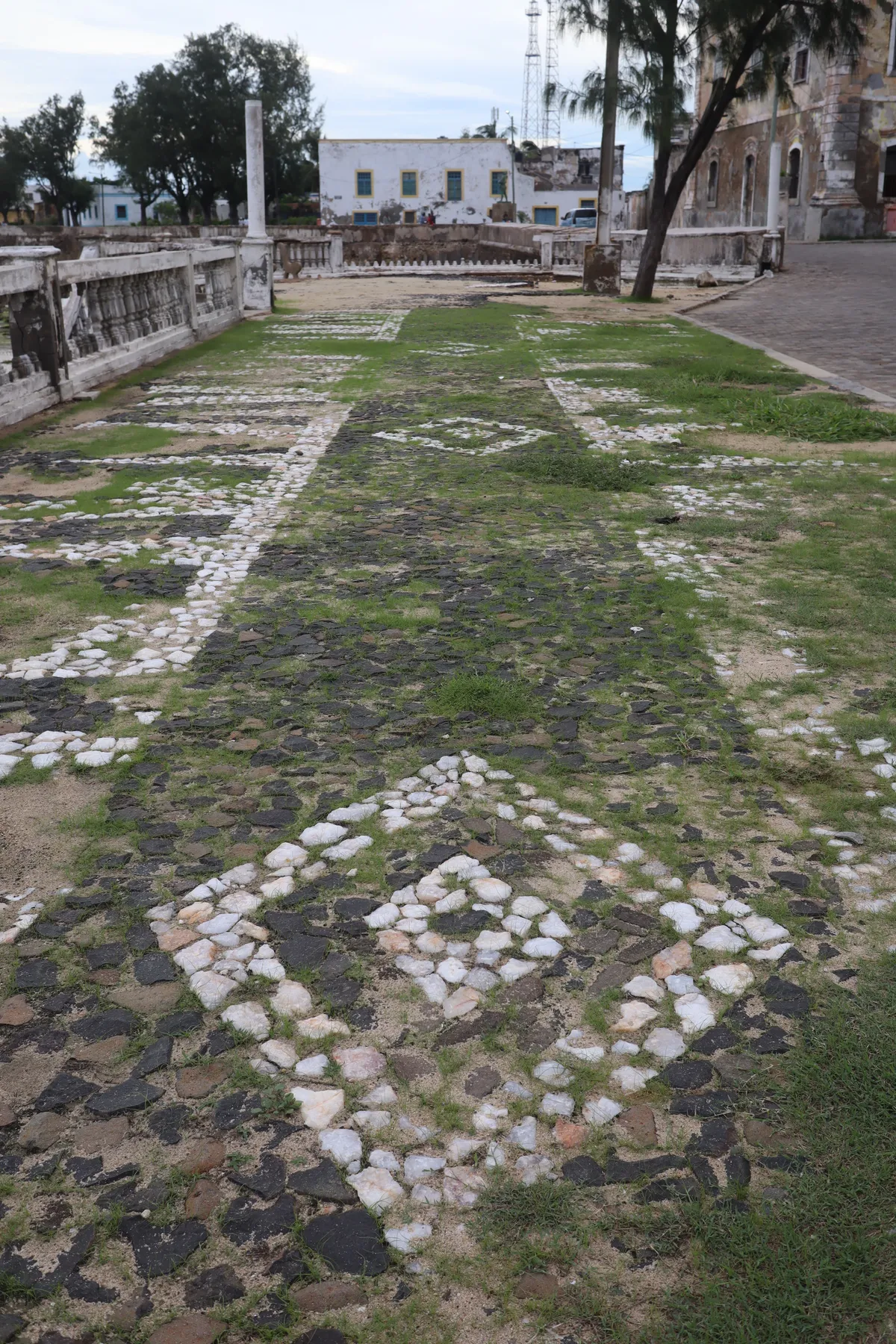
We enjoy our second and final dinner of the trip under the stars on the rooftop of a seafood restaurant. We play cards and make toasts, reminiscing on their last two weeks in the village, at the farm, and here at the beach. The night continues much in the same fashion of the previous one: games, drinks, and good conversation. Sam and I are the last ones awake this time. We sit outside looking into the blackness of the ocean and share thoughts from the trip.
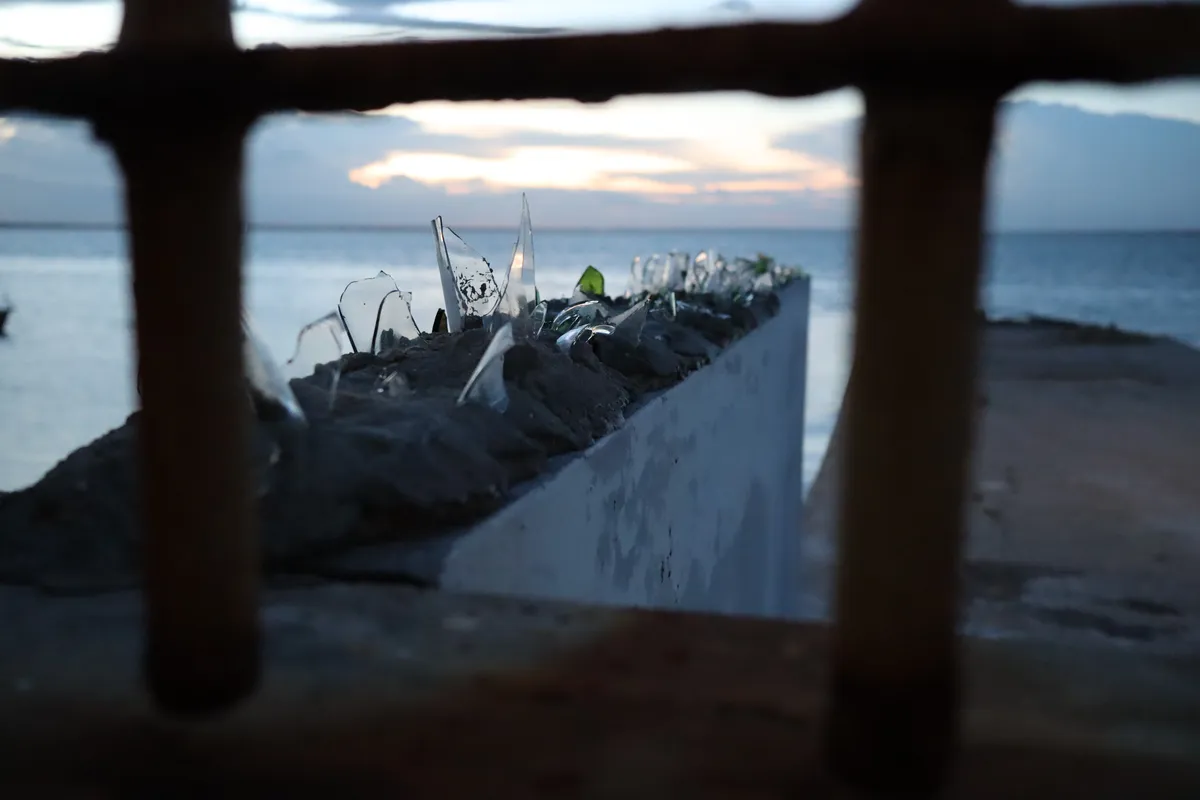
I read some of my poetry and journal entries from today. We try to put fingers on feelings, saying words in attempts to articulate them. Guilt. Privilege. Oppression. Inequality. Yes, these words are valuable, important - but they are not the feeling. Class. Power. Luck. Responsibility. More words that hold weight, relevance - but they are not the feeling. I could journal a thousand more words, fill notebooks with poems, but they would still not explain or express the feeling. A deepness of truth more profound than language could say. Something felt in an ancient place of the body, an untouchable part, which holds our very nature.
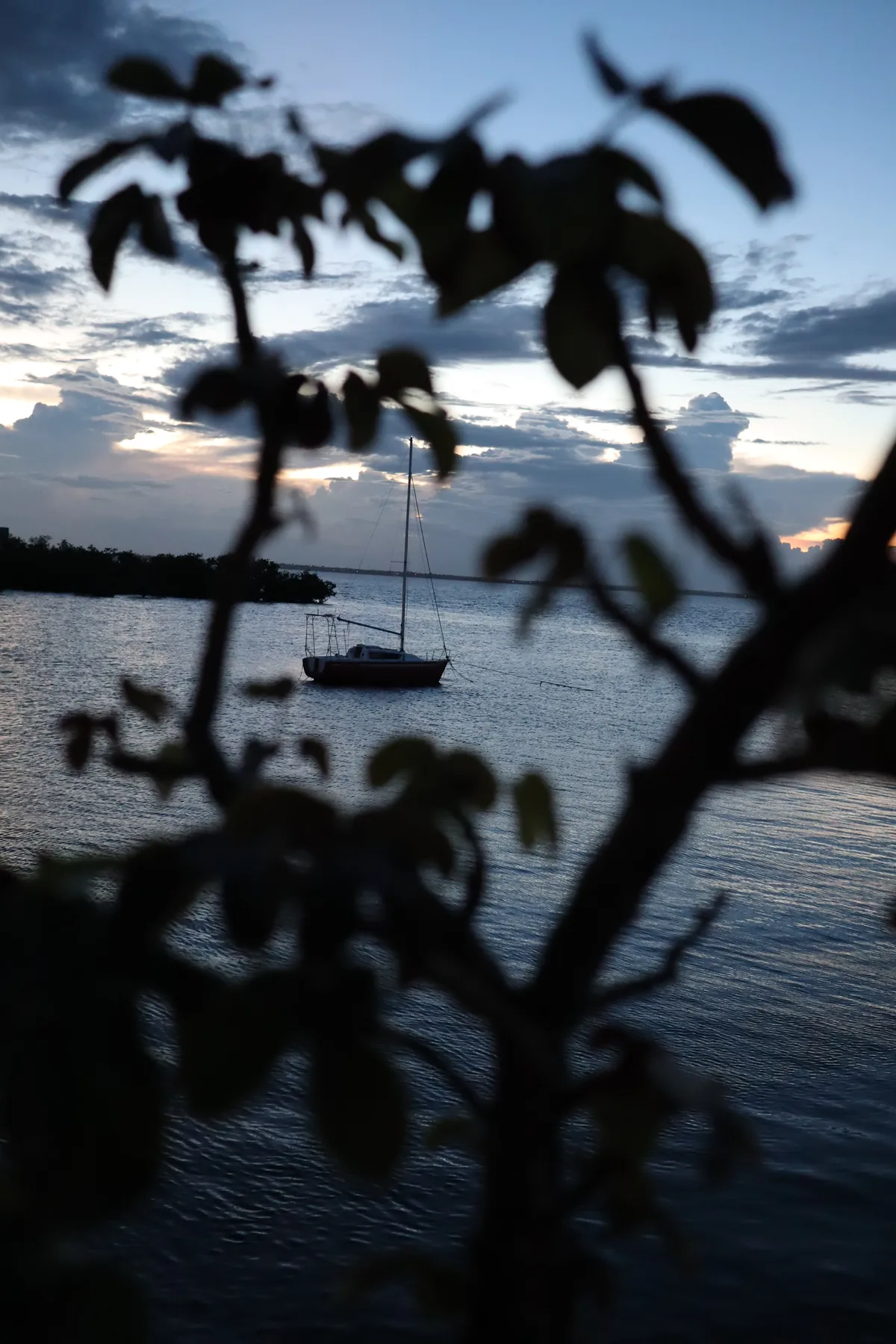
Last Light
Reflections
Casting shadows
Past and present
Collide, rippling.
Guilt mixes with
Hope as the tide
Churns all of life
Together. Time
Unifying all of
Humanity, but space
Separating us
The same minute in
Infitite places
Immeasurable
Beauty and
Unfathomable
Pain overlap in
The stillness of
Now.