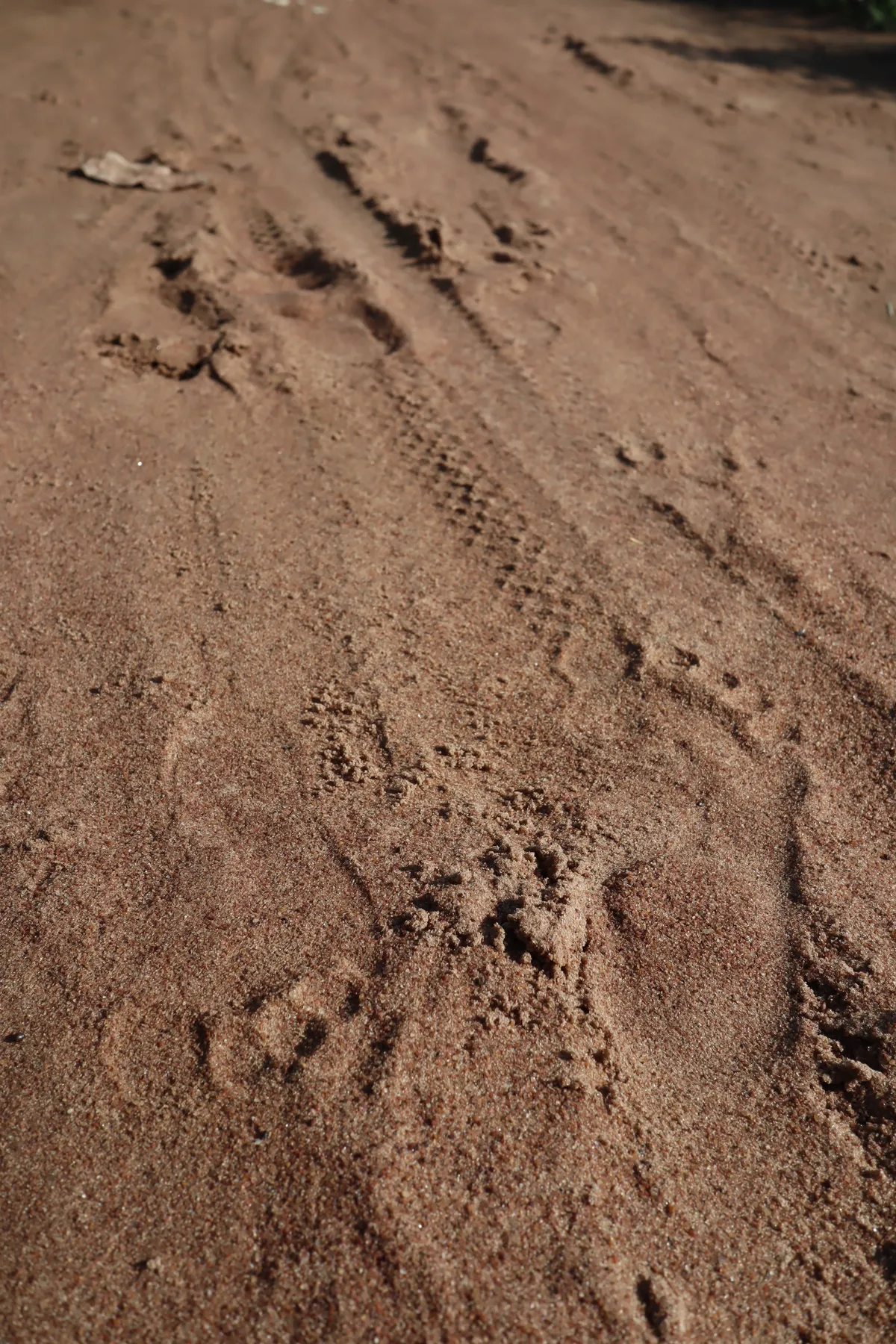
Walk
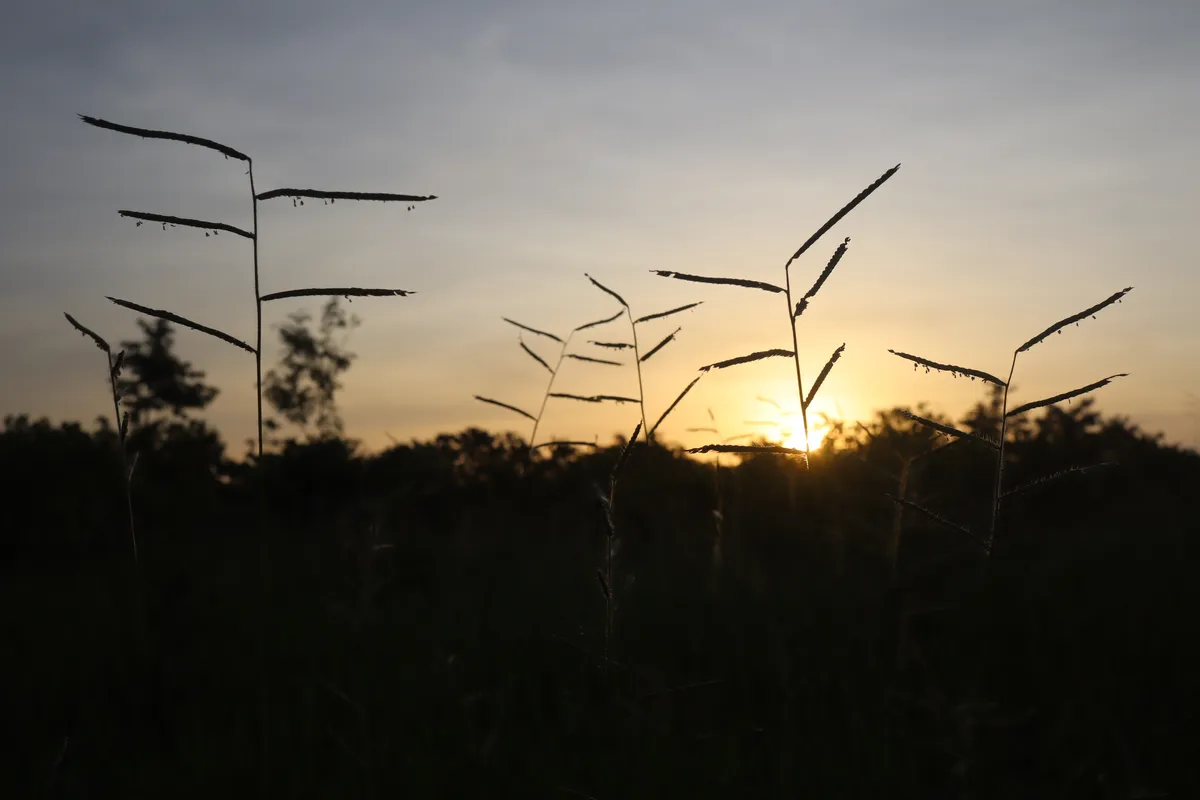
The day starts at 4:10AM, when my roof wakes me from a deep sleep. A rare early morning storm releases with a vengeance in the pre-dawn darkness. My floor begins pooling with water in the usual places. In my half-sleeping state, I follow the practiced routine of retrieving my shower bucket lid and the metal bowl from my pantry and place them in their rehearsed locations. The water drips into the containers with an echoey clang until there is a thin layer of water to create a rhythmic, soothing splash which lulls me back to sleep. At 5:00 I hear the bustle of my neighbors beginning their day and I begin to stir. I run my water kettle and make my usual morning coffee along with some oatmeal and raisins. Breakfast is enjoyed in the comfort of my pajamas in the quiet sanctuary of my room. I read a chapter of my book and set the intention for the day: greeting the world with an open heart. A few stretches and a room tidy, then it is time do do the dishes in my shared adjoining kitchen. It is 6:30 and the sisters are in their morning hour of prayer. I hear them harmonizing their beautiful worship as it echoes from the inner chamber of the convent. Their hearts speak to mine through a connection that transcends verbal language. I take in a bit of their energy to carry with me on my morning walk. I pack up my backpack with study materials and water, making sure I have my fabric shopping bag for my trip to the market later. I decide on my rubber slides, as I anticipate a very flooded walking commute into the village.
I call my sister on my walk into town. It is 9pm her time and she is settling in for her evening as I begin the following day with fresh vigor. We talk about her trip to Disneyland, her performance review at work, her upcoming beach trip with a friend. All the while, I am trekking barefoot through sand and mud, carrying my shoes in one hand and my phone in the other. At some points, the water is about as high as my knees as I walk through the flooded areas between the fields. The conversation is intermittently interrupted by greetings along the way. I check in with strangers and familiar faces walking on the road and working in the fields. A mother with four children toddling behind waves my way and all the kids giggle when I shine a big grin to them. An elderly woman emerges from a patch of tall grass and begins speaking to me in Makhua. I make out about half the words, which are types of foods. The verbs elude me. I ask her to repeat it. She says it slower and ends with asking for 15 Meticals, clarifying that she wants to buy some leaves for making lunch. They have no food at home. I rarely give more than a 5 coin, but I am starting my day with an open heart. I pull a 20 out of my wallet and hand it to her. She walks along with a friend behind me and tells the friend what she just received. I say hello to some young children working in a rice field. I greet a group of teen boys walking in the direction of the secondary school. I get a chorus of giggles from some 5 year olds huddled on the path chewing on some roots. My sister comments on all the sounds she hears during the phone call, not only the Portuguese and tribal words spoken, but also the frogs, birds, and bugs making their noisy post-rain symphony.
After the farmland stretch, I arrive at the edge of town and start getting lots more greetings from groups of children and people on their porches. Women starting the morning wash work or grinding flour in the mortar, men carrying farming equipment, children carrying babies. Music blasts from the tailor at the edge of the market. The vendors give me greetings and waves. Renee comments on how friendly everyone is here. I realize I am already starting to take these people for granted. An hour after my walk began, I arrive at my Makhua lesson.
We practice talking about emotions. We are now in a phase of learning where we are doing very simple conversations, with lots of help as we try to conjugate verbs into present or past, first and second person. We go around the table asking each other, "are you happy today?" And then "why are/aren't you?" after receiving the response. I say I am happy because I got to talk to my sister on the phone this morning. The lesson continues into practicing other emotions as well as talking about a new baby in the household. I come up with some sentences I might need to know when talking to a newborn mother. I also take the opportunity to show my teacher the pictures of my 2 week old nephew. Her eyes get misty when she sees the screenshot I took of meeting him for the first time. My grinning face down in the corner of the video call screen, my nephews gooey head resting on my sister's chest. We practice second person as we talk about him.
After lesson, I begin my second mission of the day: market. This has been a persistent struggle for me since arriving three months ago. I continue to struggle with the amount of attention I get, the density of people, and the speed of conversation. I say goodbye to Sam as we leave the lesson. He goes up the road towards his house and I square my shoulders, mentally preparing myself for the village market gauntlet. Just as I set off, a few women across the road call out a greeting and I walk up to the edge of their yard. The conversation is the typical, "where are you going? Oh, to the market? What are you buying there? OK, see you later!" I let them know that I am looking for fish today. As we finish up our encounter, a friend emerges from one house over. I gave her a handful of potatoes a few weeks back, and a couple breads a few days ago. I assume she is approaching me to say, "kovoliwa" meaning "I'm hungry". But instead her hand reveals a bright green sphere as she holds out a beautifully ripe guava to me as a gift. My open heart receives the social currency with gratitude. Our hands interlock in the typical goodbye gesture.
The market is arranged like a corridor, with vendors on either side of the main road. The edge is all the clothing shops, agricultural vendors, and electronics. Then towards the center is the food, household items, school supplies, and other miscellaneous goods. This invariably creates an onslaught of social interactions, as I receive greetings and heckling from both sides of the road as I walk down the road, feeling the blazing midday sun like a spotlight. The number of marriage proposals has drastically decreased in the last month. Most of the young bachelors have already propositioned me a couple times now. Still, the men always call me over calling me "my wife" in Makhua and try to have a chat, even though I am pretty limited in my conversation topics.
I stroll my way down to the market and have a few little conversations along the way. There are still some people who I haven't talked to since returning from my two-week visa trip to south Africa. I have gotten much better at recognizing the different ways to say "I missed you". Everyone wants to know the day that we got back. Questions are repetitive in this culture, which is really nice for language learning because you practice the same responses over and over. I buy tomatoes, onion, bell pepper, and lime in the produce area of the market. I get nails at the hardware stand for installing my new mosquito net in my room. I have a funny encounter where the Google translate app tells me the word for "nails" as the kind on your fingers, not on the walls. Obviously, they are two very different words in Portuguese. We resolve the conversation barrier and I get a half kilo of nails. I also score a red bandana, which I have been looking out for to add to my collection. 50 Metical (78c) and it is tucked into my backpack. I also buy four "bolos" which are little fried donuts commonly sold here. I like to have them on hand for my walk back as random gifts.
I am walking by a familiar face at the market taxi station/motorcycle repair shop and hear the magic word, "Karibu!" which is the Makhua invitation to join the meal. He is standing up and holding a plastic container of beans. He says the word for the beans in Makhua and I dig in with my hands, grabbing a couple beans between my fingers. They are a few bites of satisfying fiber and protein in my now empty stomach. We chat a bit, and I understand about half of what he is saying. He knows this, but doesn't mind. Its the connection and the company that matter here anyway. Smiles and laughs are exchanged and I give the customary handshake before leaving. I know I wont be back tomorrow, so I let him know I will see him "murroto", the day after tomorrow.
I continue down the stretch in the spotlight and have a few more small small interactions, the t-shirt guy asks where I have been. One of the gasoline stand guys calls me over to make sure we have our weekly check in. What's the news, how is everyone at home, can you believe this rain? The usual. I get back to the top of the market to find that the fish store is closed up. I think the owner may be taking siesta. A 7 year old girl with a 4 year old toddling behind and an infant on her back points to the house behind the store. I walk over and call out to the window, but no answer emerges. I get my bags resituated and continue onwards. I decide that I will look for fish up at the small market, which is about 20 minutes walk up the road towards my place. I greet some kids and see a few friends pass by on motorbikes as I stroll back up the road, past the same houses from the morning walk. I stop by with some friends who are always perched in the shade outside their family's convenience store. They are having lunch and invite me to join for xima and some type of meat. I accept gratefully, as I have not looked at the clock since I left my Makhua lesson and I am just now realizing that it is midday and I have already done about 2 hours of walking in the sun.
They scoop a portion for me and I dig in with my hands, squeezing the xima in my palm and rolling it into an almond shape for dipping into the sauce. I notice a few of the guys looking at my hand as I do so. They don't laugh or comment, so I assume they are admiring my technique and not poking fun. My heart remains open. One of the friends asks me to open my Makhua notebook and we look through at some vocabulary words. He likes to repeat after me in Makhua and then also practice the words in English. He quizzes me on a few words from over a month ago, and I get both wrong. He digs earlier into the notebook where I have writing from before I moved to Mozambique. Notes from social worker trainings, poems, letters, the packing list for Africa. He is admiring the English like it is hyroglyphs on the page. I offer to read one of the poems. All five guys sitting around all of a sudden come to full attention, listening intently to me reading poetry in words they don't understand. Connection which surpasses language. There is something universally beautiful about the intonation and cadence of poetry reading. This one is a poem a wrote as a birthday gift to a friend in the US. I read it with an open heart as if I am speaking directly to her, from half a world away.
I finish my xima and our conversation draws to a close. I am energized for the next leg of my journey, continuing my search for fish which I have volunteered to supply for tonight's dinner at the farm for 8 people. I am walking past the taxi station at the center of town and get a wave from a friend I haven't seen in a while. I walk over to her and her friend, who are resting in the shade along with a baby. I let her know I am shopping for fish. She asks if she can walk with me to market and I can buy her some too. My heart beams. This is my first time buying fish on my own, and I don't feel too confident with the choosing. Having a friend help me is now my unforseen best case scenario. We walk together, completing quite a few greetings on the way. She is a very patient communicator. Helping repeat things slower in Makhua, substituting some Portuguese when I am not understanding. She is almost like an interpreter for me, just without any English. We try the first fish shop and the product is not looking great. She shakes her head and we walk onward to the second shop at the edge of the market. There we find a freezer stocked with fish. She helps me pick mine and also picks some out for herself. We get them weighed and pay for the lot. It is about $6 total for my 8 fish and her 6.
We walk back to the taxi station together, openhearted. I am revelling in my success which weighs down my shoulder. Nails for my net. Fish and vegetables for tonight. A bonus bandana. I have given away all but one of my donuts, as I am saving it for my taxi driver. I give him a ring when we get back to the center. He says that he took a ride to the city today and he is still on his way back to town. I end up taking a ride with a stranger and make it to the farm with my market spoils with only a few muddy splashes onto my sandaled feet. A calm, cloudy sky welcomes me. I sit to write about my day and enjoy the juicy sweetness of my guava gift from a couple hours prior. My heart is full.
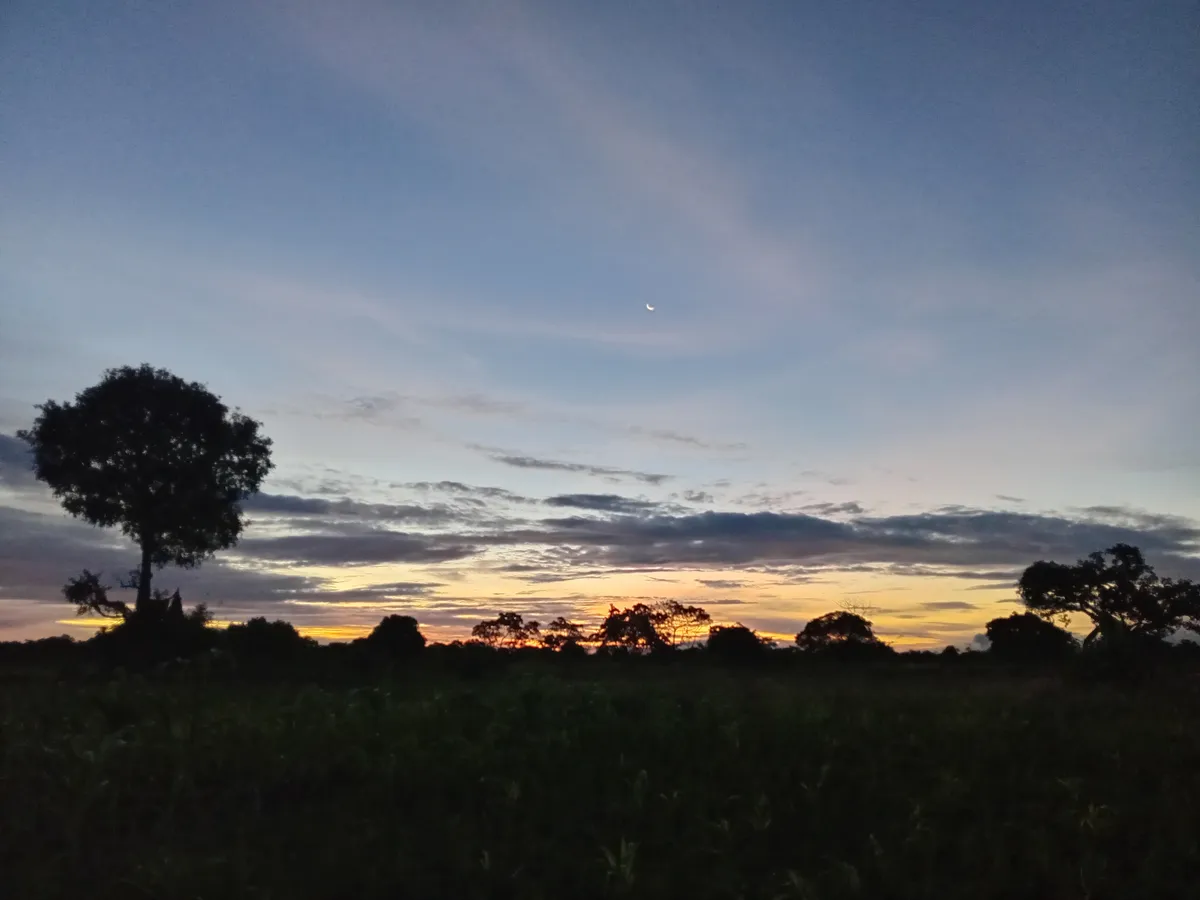
To walk in the footsteps of a neighbor
Adopting their path, even if not their
Destination. Seeing what they saw on
The way. Hearing what they heard.
Noticing the same smells and sensations.
Feeling the same sand between the toes.
Walking the same path in a parallel,
Mirrored reality. Honoring their way.
Walking not to pity them, or even to relate
But to legitimize their steps, and illuminate
The senses which are their unnoticed truth
To place each footstep with purpose,
With repetition, and with openness.
Seeing what only open eyes can see.
Feeling what only an open heart can feel.
Touching what only an open spirit can find.